






spring boot 全局异常处理无法直接捕获 instrument 注入异常,因为这类异常发生在 spring 容器初始化阶段,早于 dispatcherservlet 和 handlerexceptionresolver 的生效范围。要解决这个问题,必须通过配置 servletcontextinitializer 或自定义 errorpageregistrar 在 web 容器启动早期注册错误页面,或者使用 simplemappingexceptionresolver 配合 contextloaderlistener 来处理根上下文中的异常。

为什么标准 @ExceptionHandler 无效
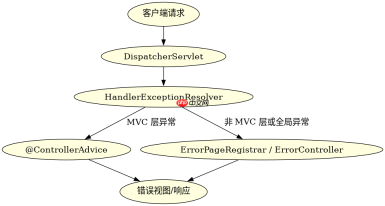
标准的全局异常处理依赖于 @ControllerAdvice 和 HandlerExceptionResolver,这些组件是 Spring MVC 的一部分,仅在请求到达 Servlet 容器后才被激活。Instrument 注入(如 Java Agent 或字节码增强)通常在类加载时或应用启动早期的 ApplicationContext 刷新阶段执行。如果此时发生异常,应用会直接崩溃或抛出 BeanCreationException,根本不会进入 MVC 的请求处理流程,因此 @ExceptionHandler 无法拦截。
import org.springframework.boot.SpringApplication; import org.springframework.boot.autoconfigure.SpringBootApplication; import org.springframework.context.annotation.Bean; import org.springframework.web.servlet.handler.SimpleMappingExceptionResolver; import java.util.Properties; @SpringBootApplication public class MyApplication { public static void main(String[] args) { SpringApplication app = new SpringApplication(MyApplication.class); // 注册自定义的错误页面注册器 app.addInitializers(context -> { ErrorPage errorPage = new ErrorPage(HttpStatus.INTERNAL_SERVER_ERROR, "/error.html"); context.getServletContext().addErrorPage(errorPage); }); app.run(args); } @Bean public SimpleMappingExceptionResolver exceptionResolver() { SimpleMappingExceptionResolver resolver = new SimpleMappingExceptionResolver(); Properties mappings = new Properties(); mappings.put("java.lang.Exception", "errorView"); resolver.setExceptionMappings(mappings); return resolver; } }
上述代码展示了两种尝试:一是通过 addInitializers 注册 ErrorPage,这能捕获部分启动失败后的 HTTP 错误;二是定义 SimpleMappingExceptionResolver,但它仅对已创建的 Bean 有效。对于 Instrument 导致的类加载失败,这两种方法均不能直接恢复应用,只能提供有限的错误页面展示。
如何通过 ErrorPageRegistrar 捕获启动期异常
为了在 Instrument 注入异常导致应用启动失败时仍能返回友好的响应,最佳实践是实现 ErrorPageRegistrar 接口。该接口允许我们在 Web 容器(如 Tomcat)完全启动前注册错误映射。当 Instrument 异常导致某个 Bean 创建失败时,Spring Boot 会尝试调用默认的错误处理机制,此时注册的 ErrorPage 将接管响应。


import org.springframework.boot.web.servlet.ErrorPage; import org.springframework.boot.web.servlet.ErrorPageRegistrar; import org.springframework.boot.web.servlet.error.ErrorController; import org.springframework.http.HttpStatus; import org.springframework.stereotype.Component; import javax.servlet.ServletException; import javax.servlet.http.HttpServletRequest; import javax.servlet.http.HttpServletResponse; import java.io.IOException; @Component public class CustomErrorPageRegistrar implements ErrorPageRegistrar, ErrorController { private static final String ERROR_PATH = "/error"; @Override public void registerErrorPages(ErrorPageRegistry registry) { ErrorPage error404 = new ErrorPage(HttpStatus.NOT_FOUND, "/error"); ErrorPage error500 = new ErrorPage(HttpStatus.INTERNAL_SERVER_ERROR, "/error"); registry.addErrorPages(error404, error500); } @Override public String getErrorPath() { return ERROR_PATH; } public void handleError(HttpServletRequest request, HttpServletResponse response) throws ServletException, IOException { Throwable throwable = (Throwable) request.getAttribute("javax.servlet.error.exception"); if (throwable != null) { if (throwable instanceof java.lang.instrument.IllegalClassFormatException) { response.setStatus(500); response.getWriter().write("Instrument injection failed: " + throwable.getMessage()); } else { response.setStatus(500); response.getWriter().write("An unexpected error occurred."); } } else { response.setStatus(500); response.getWriter().write("Unknown error."); } } }
这段代码定义了一个 CustomErrorPageRegistrar,它同时实现了 ErrorController。在 registerErrorPages 中,我们将 500 错误映射到 /error 路径。当 Instrument 异常发生时,Spring Boot 的默认错误处理机制会将请求转发到这个控制器。在 handleError 方法中,我们检查异常类型是否为 IllegalClassFormatException,如果是,则输出特定的错误信息。这种方法确保了即使在启动早期发生异常,用户也能看到一个结构化的错误响应,而不是浏览器默认的丑陋错误页面。
针对 Instrument 注入异常的特定处理逻辑
在实际应用中,Instrument 注入异常可能由多种原因引起,如字节码版本不兼容、依赖冲突或目标类不存在。为了更精确地处理这些情况,可以在 handleError 方法中添加更详细的日志记录和分类处理逻辑。例如,记录异常堆栈以便调试,并根据不同的异常子类返回不同的 HTTP 状态码或消息。
import org.slf4j.Logger; import org.slf4j.LoggerFactory; import org.springframework.boot.web.servlet.ErrorPage; import org.springframework.boot.web.servlet.ErrorPageRegistrar; import org.springframework.boot.web.servlet.error.ErrorController; import org.springframework.http.HttpStatus; import org.springframework.stereotype.Component; import javax.servlet.ServletException; import javax.servlet.http.HttpServletRequest; import javax.servlet.http.HttpServletResponse; import java.io.IOException; @Component public class DetailedErrorPageRegistrar implements ErrorPageRegistrar, ErrorController { private static final Logger logger = LoggerFactory.getLogger(DetailedErrorPageRegistrar.class); private static final String ERROR_PATH = "/error"; @Override public void registerErrorPages(ErrorPageRegistry registry) { registry.addErrorPages(new ErrorPage(HttpStatus.INTERNAL_SERVER_ERROR, "/error")); } @Override public String getErrorPath() { return ERROR_PATH; } public void handleError(HttpServletRequest request, HttpServletResponse response) throws ServletException, IOException { Throwable throwable = (Throwable) request.getAttribute("javax.servlet.error.exception"); if (throwable != null) { logger.error("Error occurred during request processing", throwable); if (throwable instanceof java.lang.instrument.IllegalClassFormatException) { response.setStatus(500); response.getWriter().write("Instrumentation Error: The target class could not be transformed. Check your agent configuration."); } else if (throwable instanceof java.lang.NoClassDefFoundError) { response.setStatus(500); response.getWriter().write("Dependency Error: A required class was not found. Ensure all dependencies are present."); } else { response.setStatus(500); response.getWriter().write("System Error: An unexpected internal error occurred. Please contact support."); } } else { response.setStatus(500); response.getWriter().write("System Error: No exception information available."); } } }
此增强版代码引入了 Logger 来记录异常详情,这对于排查 Instrument 问题至关重要。它还区分了 IllegalClassFormatException 和 NoClassDefFoundError,提供了更具针对性的错误消息。这种细粒度的处理方式有助于快速定位问题根源,提升系统的可维护性。


