






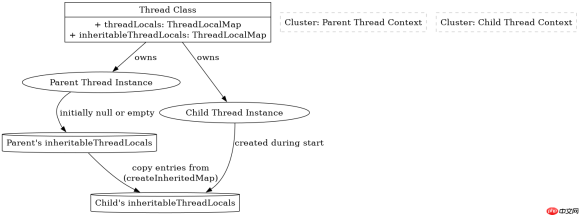
在 java 线程创建中,使用 inheritablethreadlocal 可以让子线程自动继承父线程的变量副本。具体做法是将原本用于 threadlocal 的实例替换为 inheritablethreadlocal 的实例,这样在调用 thread.start() 时,jvm 会触发 createinheritedmap 方法,将父线程的 threadlocalmap 中的键值对浅拷贝到子线程的 threadlocalmap 中。

InheritableThreadLocal 与普通 ThreadLocal 的核心区别是什么
核心区别在于数据传递的范围:普通 ThreadLocal 仅在当前线程内有效,而 InheritableThreadLocal 会将数据传递给新创建的子线程。这种机制基于 Thread 类中的 inheritableThreadLocals 字段,当子线程初始化时,它会读取父线程的这个字段并复制其内容。
import java.lang.reflect.Field;

public class InheritDemo {
    // 定义一个可继承的线程局部变量
    private static final InheritableThreadLocal<string> inheritableTl = new InheritableThreadLocal();

    public static void main(String[] args) throws InterruptedException {
        // 1. 设置父线程的值
        inheritableTl.set("ParentValue");
        System.out.println("Main thread get: " + inheritableTl.get());

        // 2. 创建并启动子线程
        Thread childThread = new Thread(() -> {
            // 3. 子线程获取值
            String value = inheritableTl.get();
            System.out.println("Child thread get: " + value);

            // 4. 修改子线程的值,不影响父线程
            inheritableTl.set("ChildValue");
            System.out.println("Child thread set to: ChildValue");
        });

        childThread.start();
        childThread.join();

        // 5. 验证父线程的值未被修改
        System.out.println("Main thread after child: " + inheritableTl.get());
    }
}</string>
运行上述代码,预期输出如下:
Main thread get: ParentValue
Child thread get: ParentValue
Child thread set to: ChildValue
Main thread after child: ParentValue
从结果可以看出,子线程成功继承了父线程设置的 "ParentValue",且后续在子线程中对变量的修改没有影响到父线程,证明了每个线程拥有独立的 ThreadLocalMap 副本。

FilePond 是一个 JavaScript 文件上传库,支持通过拖拽、粘贴和 API 方式处理文件、目录、URL 和 Data URI。它包含内置的图像优化功能、异步分块上传功能,并提供了适用于 React、Vue、Angular 和 Svelte 的适配器。
InheritableThreadLocal 的底层实现原理是怎样的
底层实现依赖于 Thread 类中的两个关键字段:threadLocals 和 inheritableThreadLocals。普通 ThreadLocal 操作的是 threadLocals,而 InheritableThreadLocal 操作的是 inheritableThreadLocals。当新线程被创建时,Thread 的构造函数或初始化逻辑会检查父线程的 inheritableThreadLocals,如果存在,则调用 createInheritedMap 方法进行浅拷贝。

import java.lang.reflect.Field;

public class ReflectionDemo {
    private static final InheritableThreadLocal<string> tl = new InheritableThreadLocal();

    public static void main(String[] args) throws Exception {
        tl.set("Data");

        Thread parent = Thread.currentThread();
        Field inheritableField = Thread.class.getDeclaredField("inheritableThreadLocals");
        inheritableField.setAccessible(true);

        Object parentMap = inheritableField.get(parent);
        System.out.println("Parent inheritable map: " + parentMap);

        Thread child = new Thread(() -> {
            try {
                Field inheritableFieldChild = Thread.class.getDeclaredField("inheritableThreadLocals");
                inheritableFieldChild.setAccessible(true);
                Object childMap = inheritableFieldChild.get(Thread.currentThread());
                System.out.println("Child inheritable map: " + childMap);
            } catch (Exception e) {
                e.printStackTrace();
            }
        });

        child.start();
        child.join();
    }
}</string>
通过反射查看 inheritableThreadLocals 字段,可以确认父子线程各自持有不同的 ThreadLocalMap 对象实例,但初始状态下它们包含相同的键值对映射关系。
如果在子线程中修改了继承来的值,会影响父线程吗
不会。因为 InheritableThreadLocal 采用的是浅拷贝(Shallow Copy)策略。这意味着父线程和子线程拥有各自独立的 ThreadLocalMap 容器。虽然初始时子线程的 Map 中包含了父线程的引用,但这两个 Map 是分开的存储结构。因此,在子线程中调用 set() 只会更新子线程自己的 Map,而父线程的 Map 保持不变。
Java免费学习笔记:立即使用
解锁 Java 大师之旅:从入门到精通的终极指南


