






getcanonicalpath() 用于获取文件在文件系统中的绝对路径,并自动解析其中的 .、.. 以及符号链接。调用该方法会返回一个规范化的字符串,消除路径中的冗余部分,确保后续操作基于唯一的物理位置。

如何处理相对路径与符号链接?
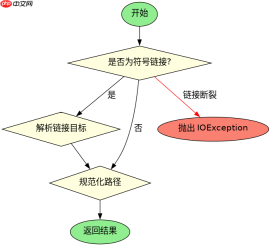
当输入为相对路径或包含符号链接时,getCanonicalPath() 会将其转换为绝对路径并解析链接指向的真实文件。如果路径中包含 ..,它会向上回溯目录层级;如果是符号链接,它会追踪到目标文件的实际路径。这一过程依赖于底层文件系统的支持,若链接断裂则抛出异常。
import java.io.File;
import java.io.IOException;

public class CanonicalPathDemo {
    public static void main(String[] args) throws IOException {
        // 假设当前工作目录下有一个名为 "link.txt" 的符号链接,指向 "real.txt"
        File linkFile = new File("link.txt");

        try {
            String canonicalPath = linkFile.getCanonicalPath();
            System.out.println("Canonical Path: " + canonicalPath);

            // 验证是否解析了符号链接
            File realFile = new File("real.txt");
            String realCanonical = realFile.getCanonicalPath();

            if (canonicalPath.equals(realCanonical)) {
                System.out.println("Symbolic link resolved correctly.");
            }
        } catch (IOException e) {
            System.err.println("Failed to get canonical path: " + e.getMessage());
        }
    }
}
运行上述代码时,若 link.txt 是有效符号链接,输出将显示其指向的 real.txt 的绝对路径。若链接无效,程序将捕获 IOException 并打印错误信息。此示例展示了如何安全地处理符号链接场景。
如何区分绝对路径与规范路径?
getAbsolutePath() 仅将相对路径转换为绝对路径,不解析 .. 或符号链接;而 getCanonicalPath() 进一步规范化路径,消除冗余结构并解析链接。例如,路径 ./dir/../file.txt 经 getAbsolutePath() 处理后可能仍保留 ..,但 getCanonicalPath() 会将其简化为 /actual/dir/file.txt。这种差异在需要唯一标识文件或避免重复读取时至关重要。

使用Atmosphere构建通过WebSocket、SSE、gRPC、WebTransport、MCP、A2A和AG-UI流传输的JVM代理网关,并带有治理钩子。

import java.io.File;
import java.io.IOException;

public class PathComparisonDemo {
    public static void main(String[] args) throws IOException {
        File file = new File("./docs/../readme.txt");

        String absPath = file.getAbsolutePath();
        String canonPath = file.getCanonicalPath();

        System.out.println("Absolute Path: " + absPath);
        System.out.println("Canonical Path: " + canonPath);

        // 验证路径是否被规范化
        if (!absPath.equals(canonPath)) {
            System.out.println("Paths differ: canonical path resolved '.." );
        }
    }
}
执行该程序后,若当前目录为 /home/user,absPath 可能输出 /home/user/./docs/../readme.txt,而 canonPath 输出 /home/user/docs/readme.txt。这证明了 getCanonicalPath() 对路径结构的清理能力。开发者应优先使用规范路径进行文件比较或缓存键生成,以避免因路径形式不同导致的逻辑错误。
当文件不存在时 getCanonicalPath 的行为是什么?
即使文件不存在,getCanonicalPath() 仍能返回规范化的路径字符串,前提是路径中所有父目录存在且无断裂的符号链接。它不会因文件缺失而报错,仅当路径本身非法(如包含不存在的中间目录或断裂链接)时才抛出 IOException。这一特性允许在创建文件前预先确定其规范位置,适用于资源预分配或路径校验场景。
Java免费学习笔记:立即使用
解锁 Java 大师之旅:从入门到精通的终极指南


