






利用 asyncio.queue 构建削峰填谷的高性能异步管道,核心做法是启动固定数量的消费者协程(worker)持续从队列中拉取任务并处理,而生产者只需将任务放入队列即可。通过设置队列的 maxsize 参数,当队列满时生产者会自动阻塞等待,从而在内存层面实现流量整形,防止后端服务因瞬时高并发请求而过载。

如何配置队列大小以控制内存占用
要控制内存占用,必须为 asyncio.Queue 指定 maxsize 参数。如果不指定,队列默认无上限,生产者会无限快地向内存中塞入数据,导致内存溢出。设置 maxsize 后,队列会在达到容量时自动暂停生产者的 put 操作,直到消费者腾出空间。
import asyncio
import time

# 定义最大队列深度,例如限制为 5 个任务
QUEUE_MAX_SIZE = 5
processed_count = 0

async def producer(queue, task_id):
    global processed_count
    # 模拟生成任务
    task = f"Task-{task_id}"
    print(f"Producer: Putting {task}")
    await queue.put(task)  # 如果队列满,这里会挂起
    print(f"Producer: {task} put successfully")

async def consumer(queue, worker_id):
    global processed_count
    while True:
        try:
            # 获取任务,如果队列为空则挂起
            task = await queue.get()
            print(f"Worker-{worker_id}: Processing {task}")

            # 模拟耗时处理
            await asyncio.sleep(1)

            print(f"Worker-{worker_id}: Finished {task}")
            queue.task_done()
            processed_count += 1
        except asyncio.CancelledError:
            break

async def main():
    # 创建有界队列
    q = asyncio.Queue(maxsize=QUEUE_MAX_SIZE)

    # 启动 2 个消费者
    consumers = [asyncio.create_task(consumer(q, i)) for i in range(2)]

    # 启动 10 个生产者任务
    producers = [asyncio.create_task(producer(q, i)) for i in range(10)]

    # 等待所有生产者完成
    await asyncio.gather(*producers)

    # 等待队列清空
    await q.join()

    # 取消消费者
    for c in consumers:
        c.cancel()

    print(f"Total processed: {processed_count}")

asyncio.run(main())
运行上述代码,你会观察到生产者并非一次性全部打印“put successfully”,而是分批次进行。当队列中有 5 个任务时,第 6 个生产者会等待,直到某个消费者处理完一个任务并调用 task_done() 后,队列腾出位置,被阻塞的生产者才会继续执行。这种机制确保了内存中同时存在的任务数不会超过 maxsize 设定的阈值。
如何实现优雅关闭与任务确认
在异步管道中,确保所有任务都被处理且程序能安全退出,关键在于正确使用 queue.join() 和 task_done()。生产者每放入一个任务,队列内部的未完成任务计数器加一;消费者每处理完一个任务,必须调用 task_done() 使计数器减一。当计数器归零时,queue.join() 返回,表明所有已提交的任务均已处理完毕。

Nodriver是Undetected-Chromedriver的官方继承者,提供异步浏览器自动化功能,可直接与Chrome DevTools Protocol通信,无需Selenium或WebDriver依赖。专为规避反机器人系统(包括Cloudflare和Imperva)的隐蔽网络自动化而构建。

import asyncio
import signal

running = True

async def graceful_shutdown(queue, workers):
    global running
    loop = asyncio.get_event_loop()

    def stop_handler():
        global running
        running = False
        # 唤醒所有可能阻塞在 get() 上的消费者
        for w in workers:
            if not w.done():
                w.cancel()

    # 注册信号处理器
    loop.add_signal_handler(signal.SIGINT, stop_handler)
    loop.add_signal_handler(signal.SIGTERM, stop_handler)

    # 等待队列清空
    await queue.join()
    print("All tasks completed.")

async def worker(queue, worker_id):
    while running:
        try:
            task = await asyncio.wait_for(queue.get(), timeout=1.0)
            print(f"Worker-{worker_id} processing {task}")
            await asyncio.sleep(0.5)  # Simulate work
            queue.task_done()
        except asyncio.TimeoutError:
            continue
        except asyncio.CancelledError:
            break

async def main():
    q = asyncio.Queue()
    workers = [asyncio.create_task(worker(q, i)) for i in range(3)]

    # 模拟一些任务
    for i in range(5):
        await q.put(f"Data-{i}")
        await asyncio.sleep(0.2)

    await graceful_shutdown(q, workers)

asyncio.run(main())
在实际应用中,如果需要在收到中断信号时停止服务,不能简单地杀死进程,否则正在处理的数据可能会丢失。通过维护一个全局状态标志 running,并在信号处理函数中将其设为 False,配合 asyncio.wait_for 的超时机制,消费者可以定期检查是否应该退出。当主逻辑认为所有任务已完成(如 queue.join() 返回)或收到终止信号时,取消所有 Worker 协程,从而实现平滑关闭。这种模式保证了即使在高负载下,系统也能有序地释放资源,避免僵尸进程或数据不一致问题。
当队列满时生产者行为的具体表现是什么
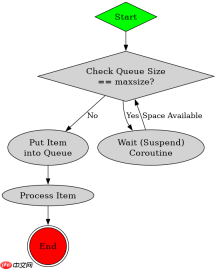
当 asyncio.Queue 达到 maxsize 上限时,调用 await queue.put(item) 的生产者协程会被挂起(Suspend),进入事件循环的等待队列中,不再消耗 CPU 时间片。此时,该生产者协程的状态变为“Pending”,直到有其他协程从队列中取出元素并调用 task_done(),使得队列剩余空间大于 0,事件循环才会重新调度该生产者协程继续执行 put 操作。这种行为是异步非阻塞 I/O 模型下的典型背压(Backpressure)机制,它有效地将下游处理能力不足的压力反馈给上游,防止内存爆炸。
Python免费学习笔记(深入):立即使用
在学习笔记中,你将探索 Python 的核心概念和高级技巧!