





不相同。在c#中,tolower() 与 ordinalignorecase 的比较结果并不总是相同,主要区别在于文化敏感性与字符映射规则。tolower() 基于当前线程的文化(culture)进行转换,可能涉及多对一或一对多的字符映射;而 ordinalignorecase 基于unicode码位进行逐字节比较,仅对ascii范围内的字母进行忽略大小写处理,不涉及文化特定的转换逻辑。
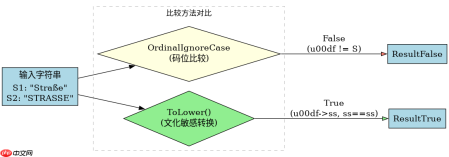
文化敏感转换与码位比较的区别是什么
这种差异源于两者底层实现机制的不同。String.Equals(..., StringComparison.OrdinalIgnoreCase) 直接比较两个字符串的UTF-16编码单元,对于非ASCII字符(如德语 ß、土耳其语 I/i),它不会尝试将其转换为小写再比较,而是直接按码位判断是否相等(通常不相等,除非它们恰好是同一字符的大写/小写形式且位于基本拉丁区)。相比之下,string.ToLower().Equals(...) 会先调用 ToLower(),该方法会根据 CultureInfo.CurrentCulture 将字符转换为对应的小写形式。在某些文化中,一个字符可能映射为多个字符,或者不同字符映射为同一个字符,这会导致比较结果与文化环境强相关。

using System;
using System.Globalization;

public class Program
{
    public static void Main()
    {
        string s1 = "Straße"; // 德语:街道
        string s2 = "STRASSE"; // 等效写法:SS

        // 1. OrdinalIgnoreCase: 直接比较码位
        bool ordinalResult = string.Equals(s1, s2, StringComparison.OrdinalIgnoreCase);
        Console.WriteLine($"OrdinalIgnoreCase: {ordinalResult}");

        // 2. ToLower + Equals (默认当前文化)
        // 假设当前文化为 de-DE (德语)
        CultureInfo currentCulture = CultureInfo.GetCultureInfo("de-DE");
        Thread.CurrentThread.CurrentCulture = currentCulture;

        bool tolowerResult = s1.ToLower().Equals(s2.ToLower());
        Console.WriteLine($"ToLower (de-DE): {tolowerResult}");

        // 3. ToLowerInvariant: 使用不变量文化
        bool invariantResult = s1.ToLowerInvariant().Equals(s2.ToLowerInvariant());
        Console.WriteLine($"ToLowerInvariant: {invariantResult}");
    }
}
// 预期输出:
// OrdinalIgnoreCase: False
// ToLower (de-DE): True
// ToLowerInvariant: True
在上述代码中,ß 在德语文化下转换为 ss,因此 s1.ToLower() 变为 strasse,与 s2.ToLower() 相等。而 OrdinalIgnoreCase 直接将 ß 与 S 比较,由于它们的Unicode码位不同,结果为 false。如果使用 ToInvariantCulture,ß 会被转换为 ss,结果同样为 true。
土耳其语中的 I/i 问题如何影响比较
另一个典型例子是土耳其语中的 I 和 i。在英语(en-US)中,I 的小写是 i,但在土耳其语(tr-TR)中,I 的小写是 ı(无点i),而 i 的大写是 İ(有点I)。这导致 ToLower() 在不同文化下产生截然不同的结果,而 OrdinalIgnoreCase 始终如一。

using System;
using System.Globalization;
using System.Threading;

public class Program
{
    public static void Main()
    {
        string s1 = "Istanbul";
        string s2 = "istanbul";

        // 设置文化为土耳其语
        Thread.CurrentThread.CurrentCulture = CultureInfo.GetCultureInfo("tr-TR");

        bool ordinalResult = string.Equals(s1, s2, StringComparison.OrdinalIgnoreCase);
        Console.WriteLine($"OrdinalIgnoreCase (tr-TR): {ordinalResult}");

        bool tolowerResult = s1.ToLower().Equals(s2.ToLower());
        Console.WriteLine($"ToLower (tr-TR): {tolowerResult}");

        // 重置为英语
        Thread.CurrentThread.CurrentCulture = CultureInfo.GetCultureInfo("en-US");

        bool tolowerEnResult = s1.ToLower().Equals(s2.ToLower());
        Console.WriteLine($"ToLower (en-US): {tolowerEnResult}");
    }
}
// 预期输出:
// OrdinalIgnoreCase (tr-TR): True
// ToLower (tr-TR): False
// ToLower (en-US): True
在土耳其语环境下,s1.ToLower() 将 I 转换为 ı,得到 ıstanbul,而 s2.ToLower() 保持 istanbul,两者不相等。而在英语环境下,I 转换为 i,两者相等。OrdinalIgnoreCase 则无视文化,始终认为 I 和 i 是大小写关系,返回 true。
在程序中使用哪种比较方式更安全
选择比较方式取决于你的业务场景。如果你是在处理用户界面显示、本地化文本或需要符合特定语言习惯的场景,应使用 CurrentCulture 相关的比较方法。如果你是在处理文件路径、URL、标识符、密钥或任何不需要文化敏感性的技术数据,OrdinalIgnoreCase 是更安全、更可预测的选择,因为它不依赖于运行时的文化设置,避免了因服务器区域配置不同导致的意外行为。
using System;
using System.Globalization;

public class Program
{
    public static void Main()
    {
        // 示例:验证用户名是否已存在(不区分大小写)
        string userInput = "Admin";
        string existingUser = "admin";

        // 推荐:使用 OrdinalIgnoreCase 进行技术比较
        bool isDuplicate = string.Equals(userInput, existingUser, StringComparison.OrdinalIgnoreCase);
        Console.WriteLine($"Is duplicate (Ordinal): {isDuplicate}");

        // 避免:使用 ToLower() 进行技术比较,可能受文化影响
        bool isDuplicateToLower = userInput.ToLower().Equals(existingUser.ToLower());
        Console.WriteLine($"Is duplicate (ToLower): {isDuplicateToLower}");
    }
}
在实际开发中,除非明确需要文化敏感的比较,否则应优先使用 StringComparison.Ordinal 或 StringComparison.OrdinalIgnoreCase,以确保行为的一致性和可预测性。