






Java try-with-resources 怎么用自定义资源实现 AutoCloseable
要实现自定义资源的 try-with-resources,只需让类实现 autocloseable 接口并定义 close() 方法。在 close() 中编写释放逻辑(如关闭流、断开连接),并在需要时抛出 exception。这样实例化该类后放入 try 括号,jvm 会在块结束时自动调用 close()。

try-with-resources 如何管理多个资源及异常处理
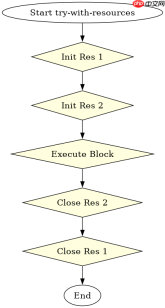
在 try 括号中声明多个资源时,它们按声明顺序初始化,但会按相反顺序自动关闭。如果 close() 抛出异常,后续资源的关闭异常会被抑制(Suppressed Exceptions)。这种机制确保了即使某个资源关闭失败,其他资源也能得到清理。

在代码库出现结构漂移之前,扫描JS或TS代码库中的禁止导入、循环依赖、孤立模块和其他依赖规则违规情况。
自定义资源 close() 方法的具体实现细节
在 close() 方法中,应确保逻辑幂等且线程安全。若资源内部包含其他可关闭对象(如数据库连接),应在 close() 中依次关闭它们。若 close() 被多次调用,需通过状态标记防止重复操作或空指针异常。
import java.io.IOException; import java.util.concurrent.atomic.AtomicBoolean; public class CustomResource implements AutoCloseable { private final String name; private final AtomicBoolean closed = new AtomicBoolean(false); public CustomResource(String name) { this.name = name; System.out.println("Opening resource: " + name); } public void doWork() { if (closed.get()) { throw new IllegalStateException("Resource is closed"); } System.out.println("Working with: " + name); } @Override public void close() throws IOException { if (closed.compareAndSet(false, true)) { System.out.println("Closing resource: " + name); // Simulate cleanup logic if (name.equals("fail_close")) { throw new IOException("Failed to close " + name); } } else { System.out.println("Resource already closed: " + name); } } public static void main(String[] args) { try (CustomResource res = new CustomResource("test_res")) { res.doWork(); } catch (IOException e) { System.err.println("Caught exception: " + e.getMessage()); } } }
Java免费学习笔记:立即使用
解锁 Java 大师之旅:从入门到精通的终极指南


