






调用 prestartcorethread() 可以逐个启动线程池中的核心线程,直到所有核心线程都进入等待状态。这能解决首次提交任务时因创建线程导致的延迟问题,确保线程池在冷启动后立刻具备处理能力。

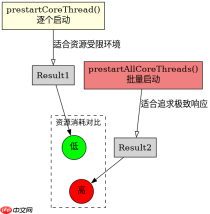
prestartCoreThread() 与 prestartAllCoreThreads() 的区别是什么
前者每次只启动一个空闲的核心线程,后者一次性启动全部核心线程。如果希望平稳预热避免瞬间资源消耗过大,应使用前者;若追求极速响应且资源充足,则使用后者。
import java.util.concurrent.*;

public class PreheatDemo {
    public static void main(String[] args) {
        ThreadPoolExecutor executor = new ThreadPoolExecutor(
            5, 5, 0L, TimeUnit.MILLISECONDS,
            new LinkedBlockingQueue()
        );

        System.out.println("活跃线程数: " + executor.getActiveCount());

        // 逐个预热线程
        for (int i = 0; i <p>运行结果:</p><div class="aritcle_card flexRow artxards">
											<div class="artcardd flexRow">
												<a class="aritcle_card_img" rel="nofollow" href="/xiazai/skill13407" title="Java基础版"><img
														src="https://img.php.cn/upload/skill/001/246/273/6adaf20d79f23518.jpg" alt="Java基础版" onerror="this.onerror='';this.src='/static/lhimages/moren/morentu.png'" ></a>
												<div class="aritcle_card_info flexColumn">
													<a rel="nofollow" href="/xiazai/skill13407" title="Java基础版" class="overflowclass">Java基础版</a>
													<p class="overflowclass">编写健壮 Java 代码的基础能力,覆盖空指针防护、相等性判断与基础异常处理。</p>
												</div>
												<a rel="nofollow" href="/xiazai/skill13407" title="Java基础版" class="aritcle_card_btn flexRow flexcenter"><b></b><span>下载</span>
												</a>
											</div>
										</div><pre class="brush:php;toolbar:false;">活跃线程数: 0
预热3个后的活跃线程数: 3
全部预热后的活跃线程数: 5
在什么场景下必须使用线程预热
当系统对首笔请求的响应时间极其敏感,且核心线程尚未被触发时,必须使用预热。例如高并发的网关服务或实时计算节点,冷启动时的线程创建开销(约几十毫秒)会导致明显的超时或抖动。

import java.util.concurrent.*;

public class ColdStartScenario {
    public static void main(String[] args) throws Exception {
        ThreadPoolExecutor pool = new ThreadPoolExecutor(
            10, 10, 60L, TimeUnit.SECONDS,
            new ArrayBlockingQueue(100)
        );

        long start = System.currentTimeMillis();

        // 模拟不预热的情况
        CountDownLatch latch = new CountDownLatch(1);
        pool.submit(() -> {
            try { latch.await(); } catch (InterruptedException e) {}
        });
        latch.countDown();

        long coldTime = System.currentTimeMillis() - start;
        System.out.println("冷启动耗时: " + coldTime + "ms");

        // 模拟预热的情况
        pool.prestartAllCoreThreads();
        Thread.sleep(100); // 等待线程就绪

        start = System.currentTimeMillis();
        CountDownLatch latch2 = new CountDownLatch(1);
        pool.submit(() -> {
            try { latch2.await(); } catch (InterruptedException e) {}
        });
        latch2.countDown();

        long warmTime = System.currentTimeMillis() - start;
        System.out.println("热启动耗时: " + warmTime + "ms");
        pool.shutdown();
    }
}
该代码展示了预热前后的时间差异。在实际生产中,通常会在应用启动阶段(如 @PostConstruct 或 Spring 的 ApplicationListener)调用预热方法,以确保业务流量到达时线程池已处于就绪状态。
Java免费学习笔记:立即使用
解锁 Java 大师之旅:从入门到精通的终极指南


