






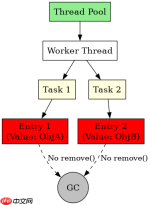
排查threadlocal内存泄漏的核心在于理解其内部引用链:threadlocal实例作为key持有弱引用,而value持有强引用。当线程池复用线程时,若未调用remove()方法清理entry,value对象将因被当前线程的threadlocalmap强引用而无法回收,导致内存泄漏。具体做法是确保在使用完threadlocal后显式调用remove(),或在finally块中执行清理操作。

ThreadLocalMap的引用结构是怎样的
ThreadLocalMap是ThreadLocal的内部静态类,其Entry继承自WeakReference
import java.lang.ref.WeakReference;

public class ThreadLocalMapDemo {
    // 模拟ThreadLocalMap中的Entry结构
    static class Entry extends WeakReference<threadlocal>> {
        Object value;

        public Entry(ThreadLocal<object> key, Object value) {
            super(key); // Key为弱引用
            this.value = value; // Value为强引用
        }
    }

    public static void main(String[] args) {
        ThreadLocal<object> threadLocal = new ThreadLocal();
        Object heavyObject = new Object(); // 假设是大对象

        // 设置值
        threadLocal.set(heavyObject);

        // 模拟Entry创建
        Entry entry = new Entry(threadLocal, heavyObject);

        // 清除对threadLocal的强引用
        threadLocal = null;

        // 此时Key(ThreadLocal)可被GC回收
        System.out.println("Key is cleared: " + entry.get() == null);
        // 但Value仍被entry.value强引用,无法回收
        System.out.println("Value is still reachable: " + (entry.value != null));
    }
}</object></object></threadlocal>
运行结果:
Key is cleared: true
Value is still reachable: true
为什么线程池会导致泄漏加剧
在单线程环境中,线程结束后所有资源释放,不会泄漏。但在线程池中,线程生命周期长且复用。若业务代码未清理ThreadLocal,Value会一直驻留在内存中,随线程复用累积大量无用对象。典型场景如Spring事务管理器、SimpleDateFormat等工具类封装的ThreadLocal,若未正确关闭连接或清理状态,极易引发泄漏。


import java.util.concurrent.ExecutorService;
import java.util.concurrent.Executors;

public class ThreadPoolLeakDemo {
    private static final ThreadLocal<string> threadLocal = new ThreadLocal();

    public static void main(String[] args) {
        ExecutorService executor = Executors.newFixedThreadPool(2);

        for (int i = 0; i  {
                try {
                    // 设置值
                    threadLocal.set("Task-" + taskId);
                    System.out.println("Thread: " + Thread.currentThread().getName() +
                                       ", Value: " + threadLocal.get());
                } finally {
                    // 关键:必须清理
                    threadLocal.remove();
                }
            });
        }

        executor.shutdown();
    }
}</string>
预期输出显示每个任务执行后,对应线程的ThreadLocal被清空。若注释掉remove(),多次提交任务后,堆内存中会残留多个String对象,即使它们不再被业务逻辑使用。
如何验证ThreadLocal是否已清理
通过反射获取当前线程的ThreadLocalMap并检查Entry数组,可以验证清理效果。正常清理后,Entry的key和value均为null。若发现非null的value,说明存在泄漏风险。此方法常用于生产环境诊断或单元测试验证。
import java.lang.reflect.Field;

public class LeakVerifier {
    public static void checkThreadLocalLeak() throws Exception {
        Thread currentThread = Thread.currentThread();
        Field field = Thread.class.getDeclaredField("threadLocals");
        field.setAccessible(true);
        Object threadLocalMap = field.get(currentThread);

        if (threadLocalMap != null) {
            Field tableField = threadLocalMap.getClass().getDeclaredField("table");
            tableField.setAccessible(true);
            Object[] table = (Object[]) tableField.get(threadLocalMap);

            for (Object entry : table) {
                if (entry != null) {
                    Field valueField = entry.getClass().getDeclaredField("value");
                    valueField.setAccessible(true);
                    Object value = valueField.get(entry);
                    if (value != null) {
                        System.out.println("Leak detected! Value: " + value);
                    }
                }
            }
        }
    }

    public static void main(String[] args) throws Exception {
        ThreadLocal<string> tl = new ThreadLocal();
        tl.set("leaked");
        checkThreadLocalLeak(); // 应检测到泄漏
        tl.remove();
        checkThreadLocalLeak(); // 应无泄漏
    }
}</string>
该程序展示了如何通过反射机制直接访问ThreadLocalMap底层结构,从而确认内存中是否存在未被清理的Value对象。这是排查线上内存泄漏问题的有效手段之一。
Java免费学习笔记:立即使用
解锁 Java 大师之旅:从入门到精通的终极指南


