在php中下载文件时浏览器直接显示内容,通常是因为http响应头中的`content-disposition`未设置为`attachment`,或者`content-type`被错误地识别为可内联显示的mime类型。解决方法是确保在输出文件内容前,正确设置`content-type`、`content-length`以及关键的`content-disposition: attachment; filename="..."`头信息。这样浏览器会触发下载对话框而不是直接在标签页中渲染。

Content-Disposition头缺失导致内联显示
当服务器返回的文件头缺少Content-Disposition: attachment时,浏览器会根据Content-Type判断是否可以直接预览。例如,图片、PDF或文本文件若被标记为inline或未指定,浏览器倾向于直接展示。要强制下载,必须显式添加attachment指令并指定文件名。
<?php $file = 'example.pdf';
if (file_exists($file)) {
    header('Content-Description: File Transfer');
    header('Content-Type: application/octet-stream');
    header('Content-Disposition: attachment; filename="' . basename($file) . '"');
    header('Expires: 0');
    header('Cache-Control: must-revalidate');
    header('Pragma: public');
    header('Content-Length: ' . filesize($file));
    readfile($file);
    exit;
}
Content-Type配置不当引发预览行为
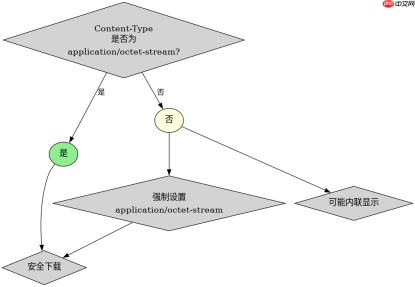
即使设置了attachment,如果Content-Type被设为特定类型的MIME(如image/png),部分浏览器仍可能尝试内联显示。通用做法是使用application/octet-stream作为默认类型,迫使浏览器不依赖内容类型进行预览决策,从而确保下载行为。

使用官方Model Context Protocol PHP SDK将PHP应用程序功能暴露为MCP工具、资源和提示,用于代理工作流。

<?php // 针对已知类型文件的强制下载示例
$file = 'image.png';
header('Content-Type: application/octet-stream');
header('Content-Disposition: attachment; filename="' . basename($file) . '"');
readfile($file);
中文文件名乱码问题如何处理
当文件名包含中文时,直接使用basename()可能导致编码问题。应使用urlencode()对文件名进行URL编码,或在Content-Disposition中使用RFC 5987标准格式filename*=UTF-8''...来确保跨浏览器兼容性。
php免费学习视频:立即使用
踏上前端学习之旅,开启通往精通之路!从前端基础到项目实战,循序渐进,一步一个脚印,迈向巅峰!