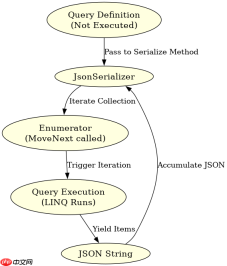
使用 system.text.json 序列化延迟执行的 ienumerable 时,查询会在调用 jsonserializer.serializeasync 或 serialize 方法的过程中真正运行。序列化器会遍历该集合,逐个读取元素并转换为 json 文本,此时才会触发 linq 查询的执行。

序列化过程中如何触发执行?
序列化器在遇到实现了 IEnumerable 的对象时,不会直接将其视为一个整体块,而是通过反射获取其枚举器(Enumerator)。它会进入一个循环,反复调用 MoveNext() 来检查是否有下一个元素。只有当 MoveNext() 被调用且返回 true 时,当前的元素才会被提取出来进行序列化。这个遍历过程就是查询实际运行的时刻。
using System;
using System.Collections.Generic;
using System.Linq;
using System.Text.Json;

class Program
{
    static void Main()
    {
        // 模拟一个延迟执行的查询
        var query = GetNumbers().Where(n => n > 5);

        Console.WriteLine("开始序列化...");
        string json = JsonSerializer.Serialize(query);
        Console.WriteLine($"序列化完成: {json}");
    }

    static IEnumerable<int> GetNumbers()
    {
        yield return 1;
        yield return 3;
        yield return 8;
        yield return 10;
    }
}</int>
预期结果:控制台先输出“开始序列化...”,然后在序列化过程中触发 GetNumbers 的迭代,最终输出包含大于 5 的数字的 JSON 字符串。
如果查询抛出异常会发生什么?
由于查询是在序列化过程中逐行执行的,如果查询逻辑中包含可能抛出异常的代码(如除以零、空引用等),异常将在序列化器尝试访问该特定元素时立即抛出。这会导致序列化中断,部分已序列化的数据可能已经写入流中,但整个操作会失败。


using System;
using System.Collections.Generic;
using System.Linq;
using System.Text.Json;

class Program
{
    static void Main()
    {
        var query = GetNumbersWithException().Where(n => n > 2);

        try
        {
            string json = JsonSerializer.Serialize(query);
            Console.WriteLine(json);
        }
        catch (Exception ex)
        {
            Console.WriteLine($"异常: {ex.Message}");
        }
    }

    static IEnumerable<int> GetNumbersWithException()
    {
        yield return 1;
        yield return 2;
        yield return 0; // 这里会导致后续除法异常
        yield return 4;
    }
}</int>
预期结果:序列化器在处理到导致异常的节点时会抛出异常,程序捕获并打印错误信息,而不是生成完整的 JSON。
基于程序中某个输入、条件或结果的具体问题
在上述示例中,输入是 GetNumbersWithException 生成的序列,条件是 n > 2,结果是序列化器在遍历过程中遇到异常而中断。这说明了延迟执行与序列化结合时的风险:错误可能在序列化中途发生,而非在查询定义时。