



在goframe框架中编写控制器与逻辑层单元测试,核心是利用其内置的 ghttp 测试套件模拟http请求,并通过依赖注入或接口隔离来测试业务逻辑。具体做法是创建继承自 ghttp.test 的结构体,使用 ghttp.newtest() 启动测试服务器,通过 request 对象发送get或post请求并断言响应状态码和json内容;对于逻辑层,则直接实例化service结构体并调用方法,利用mock对象验证输入输出及内部调用行为。

如何对控制器进行端到端集成测试?
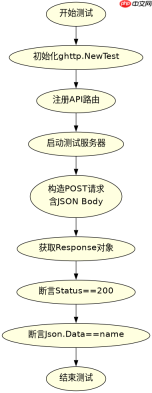
对控制器的测试应聚焦于路由分发、参数绑定及响应格式的正确性,通常采用集成测试方式覆盖完整请求链路。开发者需使用 ghttp.NewTest(t) 获取测试上下文,注册应用路由后构造 ghttp.HHTTPRequest 对象,设置Header、Body等属性发起请求,最后通过 Response 对象的 Status、Json 等方法断言结果。这种方式能验证控制器是否正确处理了中间件、校验器以及返回的数据结构。
package test

import (
    "testing"
    "github.com/gogf/gf/v2/test/gtest"
    "github.com/gogf/gf/v2/net/ghttp"
)

type UserCtrl struct{}

func (u *UserCtrl) Create(r *ghttp.Request) {
    var in struct {
        Name string `json:"name"`
    }
    if err := r.Parse(&in); err != nil {
        r.Response.WriteJsonExit(g.Map{"code": 400, "msg": "invalid params"})
    }
    // 模拟逻辑层调用
    r.Response.WriteJsonExit(g.Map{"code": 200, "data": in.Name})
}

func TestUserControllerCreate(t *testing.T) {
    gtest.C(t, func(t *gtest.T) {
        server := ghttp.NewTest(func(server *ghttp.Server) {
            server.Group("/api", func(group *ghttp.RouterGroup) {
                group.POST("/user", (&UserCtrl{}).Create)
            })
        })
        server.Start()
        defer server.Shutdown()

        client := server.Client()
        response, err := client.Post("/api/user", g.Map{
            "name": "john",
        })
        t.AssertNil(err)
        defer response.Close()

        t.Assert(response.Status, 200)
        result := response.Json().All()
        t.Assert(result["code"], 200)
        t.Assert(result["data"], "john")
    })
}
如何隔离测试逻辑层(Service)的业务规则?
逻辑层测试应剥离HTTP细节,专注于业务规则验证和数据流转。由于GoFrame推崇分层架构,Service层通常依赖Repository或外部服务接口。测试时需定义接口Mock,实现特定行为的Stub,然后注入到Service实例中。通过构造不同的输入数据,断言Service返回的结果是否符合预期,以及是否调用了正确的Mock方法。这有助于确保业务逻辑的独立性和可维护性,避免测试受数据库或网络状态影响。


package service_test

import (
    "context"
    "testing"
    "github.com/gogf/gf/v2/test/gtest"
    "github.com/gogf/gf/v2/util/gutil"
)

// 定义接口以便Mock
type UserRepository interface {
    FindByName(ctx context.Context, name string) (*User, error)
}

type UserService struct {
    Repo UserRepository
}

func (s *UserService) CreateUser(ctx context.Context, name string) (string, error) {
    existing, err := s.Repo.FindByName(ctx, name)
    if err != nil {
        return "", err
    }
    if existing != nil {
        return "", fmt.Errorf("user already exists")
    }
    // 模拟保存逻辑
    return "created", nil
}

// Mock实现
type MockRepo struct {
    FindByNameFunc func(ctx context.Context, name string) (*User, error)
}

func (m *MockRepo) FindByName(ctx context.Context, name string) (*User, error) {
    return m.FindByNameFunc(ctx, name)
}

func TestUserServiceCreateUser(t *testing.T) {
    gtest.C(t, func(t *gtest.T) {
        ctx := context.Background()
        mockRepo := &MockRepo{
            FindByNameFunc: func(ctx context.Context, name string) (*User, error) {
                return nil, nil // 模拟用户不存在
            },
        }
        service := &UserService{Repo: mockRepo}

        result, err := service.CreateUser(ctx, "alice")
        t.AssertNil(err)
        t.Assert(result, "created")
    })
}
当逻辑层依赖的Repository返回空值时如何处理?
在逻辑层测试中,若Repository返回空值(如nil指针或零值),需验证Service是否能正确处理这种边界情况而不引发panic。例如,在查询用户是否存在时,如果数据库未找到记录,Repository应返回nil而非错误。Service层需检查返回值是否为nil,若为nil则执行后续创建逻辑,否则返回冲突错误。测试时应构造Mock返回nil的场景,断言Service返回预期的成功状态或特定业务错误,确保代码健壮性。