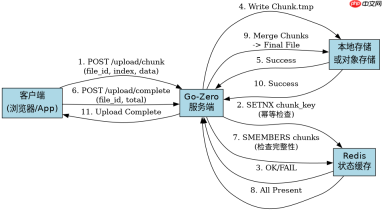
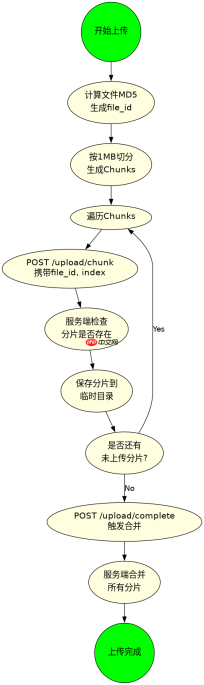
go-zero框架实现大文件分片上传与断点续传,核心在于将文件拆分为固定大小的块(chunk)并独立传输,服务端通过唯一标识(如fileid)和索引(index)合并这些块。具体做法是前端计算文件md5生成fileid,按1mb或2mb大小切片,逐个post请求上传至`/upload/chunk`接口,最后调用`/upload/complete`接口触发合并。这样做能避免单次请求过大导致的超时,且支持网络中断后从失败的分片继续上传。
如何设计分片上传的API接口结构
在Go-Zero中,应定义两个主要RPC或服务端点:一个用于接收分片数据,另一个用于通知上传完成。接口设计需包含`file_id`、`chunk_index`、`total_chunks`和二进制流字段。服务端接收到分片后,将其写入临时目录下的对应文件,若该分片已存在则直接返回成功以实现幂等性。这种结构确保了每个分片的处理是独立的,便于并发处理和错误恢复。
package main

import (
    "context"
    "crypto/md5"
    "encoding/hex"
    "fmt"
    "io"
    "log"
    "net/http"
    "os"
    "path/filepath"
    "strconv"
)

const (
    chunkSize = 1 * 1024 * 1024 // 1MB
    uploadDir = "./uploads"
)

func main() {
    os.MkdirAll(uploadDir, 0755)
    http.HandleFunc("/upload/chunk", handleChunk)
    http.HandleFunc("/upload/complete", handleComplete)
    log.Println("Server starting on :8080")
    log.Fatal(http.ListenAndServe(":8080", nil))
}

func handleChunk(w http.ResponseWriter, r *http.Request) {
    if r.Method != http.MethodPost {
        http.Error(w, "Method not allowed", http.StatusMethodNotAllowed)
        return
    }
    fileID := r.FormValue("file_id")
    indexStr := r.FormValue("index")
    totalStr := r.FormValue("total")

    index, err := strconv.Atoi(indexStr)
    if err != nil {
        http.Error(w, "Invalid index", http.StatusBadRequest)
        return
    }
    total, _ := strconv.Atoi(totalStr)

    if fileID == "" || index
<p>上述代码展示了基于HTTP的服务端实现。运行后,客户端需先计算文件的MD5作为`file_id`,然后循环读取文件内容,每次截取`chunkSize`大小的字节数组,通过POST请求发送到`/upload/chunk`,携带`file_id`、`index`和`total`参数。最后发送`/upload/complete`请求。预期结果是,当所有分片上传完毕后,`uploads`目录下会生成一个以`file_id`命名的完整文件,其内容与原文件一致。</p>
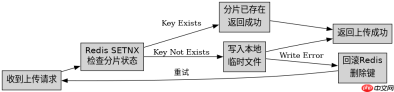
<h2>如何处理并发上传时的资源竞争问题</h2><p>在高并发场景下,多个请求可能同时尝试写入同一个临时文件或检查文件状态,导致竞态条件。解决此问题的关键在于使用文件系统锁或内存中的同步原语。在Go-Zero的微服务架构中,通常引入Redis来存储分片上传状态,利用Redis的原子操作记录哪些分片已上传。服务端在处理`/upload/chunk`时,先检查Redis中该`file_id`对应的分片集合,若不存在则写入本地磁盘并更新Redis;在处理`/upload/complete`时,查询Redis确认所有分片齐全后再进行合并。这种方式避免了本地文件系统的锁开销,提升了扩展性。</p><div class="aritcle_card flexRow artxards">
											<div class="artcardd flexRow">
												<a class="aritcle_card_img" rel="nofollow" href="/xiazai/gongju/2911" title="Go-Zero 1.9.1"><img
														src="https://img.php.cn/upload/manual/001/589/237/6af520291535e389.png" alt="Go-Zero 1.9.1" onerror="this.onerror='';this.src='/static/lhimages/moren/morentu.png'" ></a>
												<div class="aritcle_card_info flexColumn">
													<a rel="nofollow" href="/xiazai/gongju/2911" title="Go-Zero 1.9.1" class="overflowclass">Go-Zero 1.9.1</a>
													<p class="overflowclass">Go-Zero 1.9.1 源码包下载,提供日志键名定制、SSE 稳定性修复、慢写检测和运行诊断优化。</p>
												</div>
												<a rel="nofollow" href="/xiazai/gongju/2911" title="Go-Zero 1.9.1" class="aritcle_card_btn flexRow flexcenter"><b></b><span>下载</span>
												</a>
											</div>
										</div><p>@@##@@</p>
<pre class="brush:php;toolbar:false;">package main

import (
    "context"
    "fmt"
    "log"
    "net/http"
    "os"
    "path/filepath"
    "strconv"
    "sync"

    "github.com/go-redis/redis/v8"
)

var (
    redisClient *redis.Client
    mu          sync.Mutex
)

func init() {
    redisClient = redis.NewClient(&redis.Options{
        Addr:     "localhost:6379",
        Password: "",
        DB:       0,
    })
}

func handleChunkWithRedis(w http.ResponseWriter, r *http.Request) {
    if r.Method != http.MethodPost {
        http.Error(w, "Method not allowed", http.StatusMethodNotAllowed)
        return
    }
    fileID := r.FormValue("file_id")
    indexStr := r.FormValue("index")

    index, err := strconv.Atoi(indexStr)
    if err != nil {
        http.Error(w, "Invalid index", http.StatusBadRequest)
        return
    }

    if fileID == "" {
        http.Error(w, "Missing file_id", http.StatusBadRequest)
        return
    }

    // 使用Redis SetNX确保幂等性
    ctx := context.Background()
    key := fmt.Sprintf("chunks:%s:%d", fileID, index)
    ok, err := redisClient.SetNX(ctx, key, "1", 0).Result()
    if err != nil {
        http.Error(w, "Redis error", http.StatusInternalServerError)
        return
    }

    if !ok {
        w.WriteHeader(http.StatusOK)
        fmt.Fprint(w, "Chunk already recorded")
        return
    }

    // 读取并保存分片
    body, err := io.ReadAll(r.Body)
    if err != nil {
        redisClient.Del(ctx, key) // 回滚Redis状态
        http.Error(w, "Failed to read body", http.StatusInternalServerError)
        return
    }
    defer r.Body.Close()

    chunkPath := filepath.Join(uploadDir, fmt.Sprintf("%s_%d.tmp", fileID, index))
    f, err := os.Create(chunkPath)
    if err != nil {
        redisClient.Del(ctx, key)
        http.Error(w, "Failed to create chunk", http.StatusInternalServerError)
        return
    }
    defer f.Close()

    if _, err := f.Write(body); err != nil {
        redisClient.Del(ctx, key)
        http.Error(w, "Failed to write chunk", http.StatusInternalServerError)
        return
    }

    w.WriteHeader(http.StatusOK)
    fmt.Fprintf(w, "Chunk %d uploaded", index)
}
这段代码引入了Redis作为分布式锁和状态存储。在`handleChunkWithRedis`函数中,首先尝试在Redis中设置一个键值对,如果设置成功(即之前不存在),则执行写入磁盘操作;如果设置失败,说明该分片已被其他请求处理,直接返回成功。这种机制有效防止了重复写入和竞态条件。注意,实际生产中还需处理Redis连接失败的回退策略,例如降级为本地文件锁。
如何验证合并后的文件完整性
在分片上传完成后,必须验证合并文件的完整性,以确保没有数据丢失或损坏。最直接的方法是在上传前计算原始文件的MD5或SHA256哈希值,并将其作为`file_id`的一部分或单独参数传递给服务端。在服务端合并完成后,重新计算合并文件的哈希值,并与客户端提供的哈希值进行比对。如果两者一致,则上传成功;否则,标记上传失败并提示用户重试。这种方法利用了哈希函数的单向性和抗碰撞性,能够高效地检测数据完整性。