






Java try-with-resources 中 Native 资源怎么管理
java 的 try-with-resources 机制通过自动调用资源的 close() 方法来管理 native 资源,前提是这些资源必须实现 autocloseable 接口。对于 java 9 及以上版本,如果 native 资源是在 try 语句之前初始化的局部变量且为 final 或等效 final,可以直接在 try 括号中引用,无需额外包装。若资源初始化与声明分离,或者需要更精细的控制,开发者应确保自定义的 native 资源类正确实现了 close() 方法以释放底层句柄,并在 finally 块或析构逻辑中处理异常。

try-with-resources 如何自动关闭 Native 资源
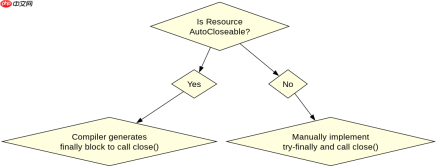
当使用 try-with-resources 时,编译器会自动生成一个 finally 块来调用 close() 方法。对于 Native 资源,关键在于 close() 内部必须包含释放系统资源(如文件描述符、内存指针)的逻辑。如果 close() 抛出异常,它会被抑制(suppressed),而不会掩盖 try 块中发生的原始异常。这种机制确保了即使发生错误,Native 资源也能被尝试释放。
import java.io.*;

public class NativeResourceExample {
    public static void main(String[] args) {
        // 假设有一个实现 AutoCloseable 的 Native 资源类
        NativeHandle handle = new NativeHandle();

        // Java 9+ 支持直接引用外部 final 变量
        try (NativeHandle h = handle) {
            h.doWork();
        } catch (Exception e) {
            System.err.println("Error: " + e.getMessage());
        }
        // 离开 try 块后,handle.close() 自动被调用
    }
}

class NativeHandle implements AutoCloseable {
    private long nativePtr = allocateNativeMemory();

    public void doWork() {
        if (nativePtr == 0) throw new IllegalStateException("Closed");
        System.out.println("Working with native resource at: " + Long.toHexString(nativePtr));
    }

    @Override
    public void close() throws Exception {
        if (nativePtr != 0) {
            freeNativeMemory(nativePtr);
            nativePtr = 0;
            System.out.println("Native resource freed.");
        }
    }

    private native long allocateNativeMemory();
    private native void freeNativeMemory(long ptr);
    static { System.loadLibrary("native_lib"); }
}
上述代码展示了如何在 try-with-resources 中管理 Native 资源。关键点在于 NativeHandle 类实现了 AutoCloseable,并在 close() 中调用了本地方法 freeNativeMemory。在 Java 9 中,如果 handle 是 final 的,可以直接在 try 括号中使用它,避免了额外的包装步骤。执行流程如下:进入 try 块 -> 执行业务逻辑 -> 退出 try 块(正常或异常)-> 调用 close() -> 释放 Native 内存。
Native 资源关闭时的异常处理策略
在 try-with-resources 中,如果 close() 方法抛出异常,该异常会被添加到原始异常的抑制列表中(通过 addSuppressed)。这意味着开发者可以通过 getSuppressed() 方法获取所有因关闭资源而引发的异常。对于 Native 资源,建议在 close() 中捕获可能抛出的本地异常,并将其转换为运行时异常或记录日志,以避免阻塞主流程。同时,确保 close() 方法是幂等的,即多次调用不会产生副作用。

FilePond 是一个 JavaScript 文件上传库,支持通过拖拽、粘贴和 API 方式处理文件、目录、URL 和 Data URI。它包含内置的图像优化功能、异步分块上传功能,并提供了适用于 React、Vue、Angular 和 Svelte 的适配器。

import java.io.*;

public class SuppressedExceptionExample {
    public static void main(String[] args) {
        NativeHandleWithCloseError handle = new NativeHandleWithCloseError();
        try (NativeHandleWithCloseError h = handle) {
            h.doWork();
            throw new RuntimeException("Business Logic Error");
        } catch (Exception e) {
            System.err.println("Primary Exception: " + e.getMessage());
            for (Throwable suppressed : e.getSuppressed()) {
                System.err.println("Suppressed Exception: " + suppressed.getMessage());
            }
        }
    }
}

class NativeHandleWithCloseError implements AutoCloseable {
    private long nativePtr = allocateNativeMemory();

    public void doWork() {
        if (nativePtr == 0) throw new IllegalStateException("Closed");
        System.out.println("Working...");
    }

    @Override
    public void close() throws Exception {
        if (nativePtr != 0) {
            // 模拟关闭时出错
            freeNativeMemory(nativePtr);
            nativePtr = 0;
            throw new IOException("Failed to close native resource");
        }
    }

    private native long allocateNativeMemory();
    private native void freeNativeMemory(long ptr);
    static { System.loadLibrary("native_lib"); }
}
此示例演示了当 close() 抛出异常时,如何通过 getSuppressed() 获取抑制异常。在 Native 资源管理中,这有助于调试和监控资源释放问题。执行流程:进入 try 块 -> 抛出业务异常 -> 触发 close() -> close() 抛出 IO 异常 -> 业务异常被添加抑制异常 -> 捕获并打印两者。
基于 NativeHandle 关闭失败的具体问题分析
当 NativeHandle 的 close() 方法因底层系统调用失败(如 freeNativeMemory 返回错误码)而抛出异常时,try-with-resources 机制会将该异常作为抑制异常附加到主异常上。如果未正确处理抑制异常,可能导致资源泄漏的线索被忽略。因此,在 close() 中应详细记录错误原因,并确保即使关闭失败,资源状态也被标记为已关闭,防止重复操作。
Java免费学习笔记:立即使用
解锁 Java 大师之旅:从入门到精通的终极指南


