






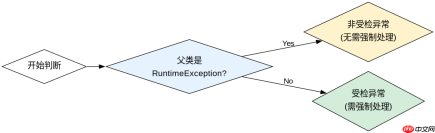
java 中区分受检异常(checked exception)和非受检异常(unchecked exception)的核心依据是它们是否继承自 runtimeexception。所有直接继承自 exception 的类都是受检异常,编译器强制要求处理;而继承自 runtimeexception 的类是非受检异常,编译器不强制处理。开发者在编写代码时,只需检查异常类的继承关系即可明确其类型,并据此决定是使用 try-catch 块捕获还是使用 throws 声明抛出。
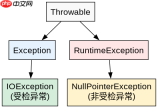
如何判断一个异常类属于哪种类型
判断方法非常直接:查看该异常类的父类。如果父类是 RuntimeException,它就是非受检异常;如果父类是 Exception 且不是 RuntimeException,它就是受检异常。例如,IOException 继承自 Exception,因此是受检异常;而 NullPointerException 继承自 RuntimeException,因此是非受检异常。这种层级结构决定了编译器对它们的处理方式。
public class ExceptionCheck {
    public static void main(String[] args) {
        // 受检异常示例
        try {
            throw new java.io.IOException("IO Error");
        } catch (java.io.IOException e) {
            System.out.println("Caught Checked Exception: " + e.getClass().getName());
        }

        // 非受检异常示例
        try {
            throw new NullPointerException("Null Pointer");
        } catch (NullPointerException e) {
            System.out.println("Caught Unchecked Exception: " + e.getClass().getName());
        }
    }
}
运行上述代码会输出两个异常的名称,证明它们在运行时可以被捕获,但编译器在编译阶段对 IOException 有强制处理要求,而对 NullPointerException 没有。这验证了继承关系是区分两者的唯一标准。
受检异常与非受检异常的处理方式差异
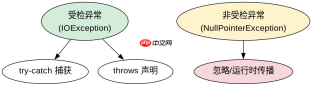
受检异常和非受检异常在处理方式上有显著差异。对于受检异常,编译器会强制要求开发者要么使用 try-catch 块捕获它,要么在方法签名中使用 throws 关键字声明抛出。如果不这样做,代码将无法通过编译。而对于非受检异常,编译器不强制要求处理,开发者可以选择捕获它,也可以忽略它,让它在程序运行时自然传播到调用栈顶层。

import java.io.*;

public class ExceptionHandling {
    // 受检异常必须声明或捕获
    public void readFile() throws IOException {
        FileReader fr = new FileReader("file.txt");
    }

    // 非受检异常无需声明
    public void divide(int a, int b) {
        int result = a / b; // 可能抛出 ArithmeticException
    }

    public static void main(String[] args) {
        ExceptionHandling eh = new ExceptionHandling();
        try {
            eh.readFile();
        } catch (IOException e) {
            e.printStackTrace();
        }
        // 这里不需要 try-catch 处理 divide 中的潜在异常
        eh.divide(10, 0);
    }
}
这段代码展示了两种异常的不同处理方式。readFile 方法因为涉及 IOException(受检异常),必须在方法签名中声明 throws IOException,并在 main 方法中捕获它。而 divide 方法中的 ArithmeticException(非受检异常)则不需要任何声明或捕获,即使发生错误,程序也会直接崩溃,不会干扰编译过程。
自定义异常时如何选择继承关系
在创建自定义异常时,选择继承 Exception 还是 RuntimeException 取决于异常的语义和使用场景。如果异常表示的是外部条件导致的、调用者应该能够恢复的错误(如文件不存在、网络超时),通常继承 Exception 使其成为受检异常,强制调用者处理。如果异常表示的是编程错误(如参数无效、空指针),通常继承 RuntimeException 使其成为非受检异常,不强制处理,因为这类错误应该在编码阶段就被避免。
public class CustomExceptions {
    // 受检异常:表示可恢复的外部错误
    public static class FileNotFound extends Exception {
        public FileNotFound(String message) {
            super(message);
        }
    }

    // 非受检异常:表示编程错误
    public static class InvalidInput extends RuntimeException {
        public InvalidInput(String message) {
            super(message);
        }
    }

    public void processFile(String path) throws FileNotFound {
        if (path == null || path.isEmpty()) {
            throw new FileNotFound("Path is invalid");
        }
        // 模拟文件处理
    }

    public void validateInput(String input) {
        if (input == null) {
            throw new InvalidInput("Input cannot be null");
        }
    }

    public static void main(String[] args) {
        CustomExceptions ce = new CustomExceptions();
        try {
            ce.processFile("");
        } catch (FileNotFound e) {
            System.out.println("Handled: " + e.getMessage());
        }
        // InvalidInput 不需要显式处理
        ce.validateInput(null);
    }
}
通过定义 FileNotFound 和 InvalidInput 两个自定义异常,分别继承 Exception 和 RuntimeException,可以清晰地看到它们在编译器和运行时的不同行为。processFile 方法强制调用者处理 FileNotFound,而 validateInput 方法中的 InvalidInput 则被忽略,直到运行时触发。这种设计有助于区分业务逻辑错误和系统级错误。
Java免费学习笔记:立即使用
解锁 Java 大师之旅:从入门到精通的终极指南


