






java 中 optional 无法直接包装数组引用,因为数组是对象而非基本类型,且 of() 不接受 null。处理数组引用的核心做法是使用 optional.ofnullable(array) 进行包装,并通过 map() 或 orelse() 安全访问其长度或元素。若需将数组转为流处理,应使用 arrays.stream() 配合 flatmap() 展开嵌套结构。

如何安全获取非空数组的长度
当输入可能为 null 时,调用 Optional.ofNullable(arr).map(a -> a.length) 可返回 OptionalInt。若数组为空则返回空的 OptionalInt,否则包含实际长度值。此方法避免了 NullPointerException,并允许链式调用如 .orElse(0) 提供默认值。
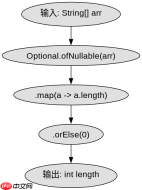
import java.util.Optional;
import java.util.Arrays;

public class ArrayOptDemo {
    public static void main(String[] args) {
        String[] arr = {"a", "b"};
        String[] nullArr = null;

        // 安全获取长度
        int len1 = Optional.ofNullable(arr).map(a -> a.length).orElse(0);
        int len2 = Optional.ofNullable(nullArr).map(a -> a.length).orElse(0);

        System.out.println("Len: " + len1); // 2
        System.out.println("Null Len: " + len2); // 0
    }
}
如何将二维数组扁平化为字符串列表
处理二维数组时,先包装外层数组,再用 flatMap() 将内层数组转为 Stream 并合并。具体做法是 Optional.ofNullable(matrix).map(Arrays::stream).orElse(Stream.empty()).flatMap(Arrays::stream).toList()。这能自动跳过 null 输入,并将所有子数组元素展平为单一列表。


import java.util.*;
import java.util.stream.*;

public class MatrixFlat {
    public static void main(String[] args) {
        String[][] matrix = {{"x", "y"}, {"z"}};
        String[][] nullMatrix = null;

        List<string> flat1 = Optional.ofNullable(matrix)
                .map(Arrays::stream)
                .orElse(Stream.empty())
                .flatMap(Arrays::stream)
                .collect(Collectors.toList());

        List<string> flat2 = Optional.ofNullable(nullMatrix)
                .map(Arrays::stream)
                .orElse(Stream.empty())
                .flatMap(Arrays::stream)
                .collect(Collectors.toList());

        System.out.println(flat1); // [x, y, z]
        System.out.println(flat2); // []
    }
}</string></string>
为什么不能直接用Optional.of()包装数组
因为 Optional.of(T value) 要求参数非 null,若传入 null 会直接抛出 NullPointerException。而数组引用本身可以是 null,所以必须用 ofNullable()。若误用 of(),程序会在初始化阶段崩溃,无法进入后续逻辑。
Java免费学习笔记:立即使用
解锁 Java 大师之旅:从入门到精通的终极指南


