






在 completionstage 的链式调用中,可以通过 executor() 方法指定一个自定义的 executor,而 java.util.concurrent.executors 提供的静态工厂方法(如 singlethreadexecutor)返回的正是实现了 executor 接口的对象。因此,直接使用这些工厂方法获取的实例即可作为参数传入,从而改变后续异步任务的执行线程环境。

如何为单个阶段指定自定义执行器
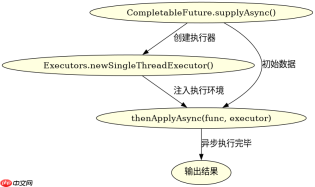
要为一个特定的 thenApply 或 thenAccept 阶段指定执行器,应使用带有 Executor 参数的重载方法,例如 thenApplyAsync(Function, Executor)。这允许你明确控制该步骤由哪个线程池处理,而不是依赖默认的 ForkJoinPool.commonPool()。这种方式适用于需要隔离不同业务逻辑线程资源的场景。
import java.util.concurrent.CompletableFuture;
import java.util.concurrent.Executor;
import java.util.concurrent.Executors;

public class Demo {
    public static void main(String[] args) {
        Executor customExecutor = Executors.newSingleThreadExecutor();

        CompletableFuture<string> future = CompletableFuture.supplyAsync(() -> "Step 1")
                .thenApplyAsync(s -> s + " - Step 2", customExecutor);

        System.out.println(future.join());
        customExecutor.shutdown();
    }
}</string>
上述代码中,customExecutor 是由 Executors.newSingleThreadExecutor() 创建的,它实现了 Executor 接口。当 thenApplyAsync 被调用时,lambda 表达式 s -> s + " - Step 2" 将被提交到该单线程池中执行。最终输出的字符串将包含两个步骤的结果,且第二步的处理发生在指定的自定义线程中。
如何统一设置整个链路的默认执行器
如果希望整个 CompletableFuture 链路中的所有异步操作都使用同一个自定义执行器,可以在构建阶段之后立即调用 executor(Executor) 方法。该方法会返回一个新的 CompletionStage,其后续的异步调用若未显式指定执行器,将默认使用此处的设置。这是一种批量配置的方式,简化了多处重复传参的代码。

使用Atmosphere构建通过WebSocket、SSE、gRPC、WebTransport、MCP、A2A和AG-UI流传输的JVM代理网关,并带有治理钩子。

import java.util.concurrent.CompletableFuture;
import java.util.concurrent.Executor;
import java.util.concurrent.Executors;

public class DemoChain {
    public static void main(String[] args) {
        Executor sharedExecutor = Executors.newFixedThreadPool(4);

        CompletableFuture<string> future = CompletableFuture.supplyAsync(() -> "Start")
                .executor(sharedExecutor)
                .thenApplyAsync(s -> s + " - A")
                .thenApplyAsync(s -> s + " - B");

        System.out.println(future.join());
        sharedExecutor.shutdown();
    }
}</string>
在这个示例中,executor(sharedExecutor) 被链接在 supplyAsync 之后。随后的 thenApplyAsync 调用没有提供第二个参数,因此它们会自动继承 sharedExecutor 作为执行环境。这意味着 A 和 B 两个转换步骤都会在拥有四个线程的固定线程池中运行,实现了执行上下文的统一。
使用 delayedExecutor 时的注意事项
虽然问题提到了 delayedExecutor,但在标准的 Java 8+ CompletionStage API 中,并没有名为 delayedExecutor 的直接方法。通常用户可能指的是通过自定义 Executor 实现延迟执行,或者误用了某些第三方库的方法。若需实现延迟执行,通常需要包装 Executor 或使用 ScheduledExecutorService。在使用任何自定义 Executor 时,务必注意资源管理,避免线程泄漏。对于 CompletableFuture 而言,关键在于确保传入的 Executor 能够正确处理任务提交,并且在线程结束后正确关闭,以维持系统的稳定性。
Java免费学习笔记:立即使用
解锁 Java 大师之旅:从入门到精通的终极指南


