






在java的optional中,lambda表达式通过map()方法实现链式转换,将optional中的值映射为optional。具体做法是调用optional.map(value -> value * 2),如果optional包含值则执行lambda并包装结果,若为空则保持空状态且不触发lambda。

如何安全地提取嵌套对象属性
使用flatMap()处理返回Optional的方法,避免产生Optional的双重包裹。例如从用户对象中提取地址时,直接链接map(User::getAddress).flatMap(Address::getCity)即可。
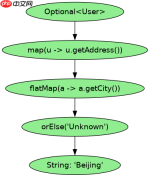

import java.util.Optional;

public class User {
    private String name;
    private Address address;

    public static Optional<user> findUser(String id) {
        return Optional.of(new User("Alice", new Address("Beijing")));
    }

    public Address getAddress() { return address; }
    public User(String name, Address address) { this.name = name; this.address = address; }
}

class Address {
    private String city;
    public Optional<string> getCity() { return Optional.ofNullable(city); }
    public Address(String city) { this.city = city; }
}

public class Main {
    public static void main(String[] args) {
        Optional<user> userOpt = User.findUser("123");
        String city = userOpt
            .map(u -> u.getAddress())
            .flatMap(a -> a.getCity())
            .orElse("Unknown");
        System.out.println(city);
    }
}</user></string></user>
如何处理转换过程中的异常或空值
在Lambda内部结合filter()进行条件过滤,或使用orElseThrow()抛出特定异常。当输入可能为null或不符合业务逻辑时,filter()会将Optional变为空,从而跳过后续操作。

import java.util.Optional;

public class Main {
    public static void main(String[] args) {
        Optional<integer> opt = Optional.of(5);

        // 使用 filter 排除负数
        int result = opt
            .filter(n -> n > 0)
            .map(n -> n * 10)
            .orElse(-1);
        System.out.println(result); // 输出 50

        // 使用 orElseThrow 处理缺失值
        try {
            int val = Optional.empty()
                .map(n -> n * 10)
                .orElseThrow(() -> new RuntimeException("Value missing"));
        } catch (RuntimeException e) {
            System.out.println(e.getMessage());
        }
    }
}</integer>
Java免费学习笔记:立即使用
解锁 Java 大师之旅:从入门到精通的终极指南


