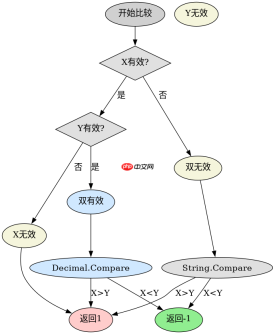
当c#数字字符串包含无效值(如空串、非数字字符或超出范围的值)时,排序规则应优先使用自然排序(natural sort),即按数值大小而非字典序排列,同时通过自定义比较器将无效值统一置于末尾或开头。具体做法是编写一个实现 icomparer 的类,在 compare 方法中尝试解析每个字符串为 decimal,若解析成功则比较数值,若失败则根据预设策略(如返回最大值或最小值)处理无效项,从而确保有效数字按大小排序,无效值位置固定。

如何区分有效数字与无效字符串以决定排序优先级?
区分的关键在于解析结果:使用 decimal.TryParse 判断字符串是否可转换为有效数值。若返回 true,则该字符串为有效数字,参与数值比较;若返回 false,则为无效值,不参与数值比较,而是根据比较器的逻辑被归类到“无效组”。这种机制确保了排序时有效数据按数学顺序排列,而无效数据被隔离。例如,输入列表 ["10", "abc", "5", ""],有效值为 "5" 和 "10",无效值为 "abc" 和 ""。排序后,有效值按 5 排列,无效值根据策略排在最后。
using System;
using System.Collections.Generic;
using System.Globalization;

public class NaturalSortWithInvalid : IComparer<string>
{
    public int Compare(string x, string y)
    {
        if (x == null) x = "";
        if (y == null) y = "";

        bool xValid = decimal.TryParse(x, NumberStyles.Float, CultureInfo.InvariantCulture, out decimal xVal);
        bool yValid = decimal.TryParse(y, NumberStyles.Float, CultureInfo.InvariantCulture, out decimal yVal);

        if (!xValid && !yValid)
        {
            return string.Compare(x, y, StringComparison.Ordinal);
        }
        if (!xValid)
        {
            return 1; // Invalid goes after valid
        }
        if (!yValid)
        {
            return -1; // Valid goes before invalid
        }

        return xVal.CompareTo(yVal);
    }
}

class Program
{
    static void Main()
    {
        var list = new List<string> { "10", "abc", "5", "", "3.14" };
        list.Sort(new NaturalSortWithInvalid());
        foreach (var item in list)
        {
            Console.WriteLine(item);
        }
    }
}</string></string>
预期输出:
5
3.14
10
abc
""
如何处理不同无效值之间的相对顺序?
当两个字符串均为无效值时,它们的相对顺序由 string.Compare 决定,采用字典序(Ordinal)。这意味着 "abc" 会排在 "" 之前,因为空字符串在字典序中通常被视为最小。这种处理方式保证了无效值内部的确定性,避免排序不稳定。在上述代码中,当 x 和 y 都无效时,执行 return string.Compare(x, y, StringComparison.Ordinal);,这直接比较字符串的字面值。因此,对于输入 ["b", "a", ""],排序结果为 ["", "a", "b"]。这种设计使得无效值的排序行为可预测,且不影响有效数字的排序逻辑。


using System;
using System.Collections.Generic;
using System.Globalization;

public class NaturalSortWithInvalid : IComparer<string>
{
    public int Compare(string x, string y)
    {
        if (x == null) x = "";
        if (y == null) y = "";

        bool xValid = decimal.TryParse(x, NumberStyles.Float, CultureInfo.InvariantCulture, out decimal xVal);
        bool yValid = decimal.TryParse(y, NumberStyles.Float, CultureInfo.InvariantCulture, out decimal yVal);

        if (!xValid && !yValid)
        {
            return string.Compare(x, y, StringComparison.Ordinal);
        }
        if (!xValid)
        {
            return 1;
        }
        if (!yValid)
        {
            return -1;
        }

        return xVal.CompareTo(yVal);
    }
}

class Program
{
    static void Main()
    {
        var list = new List<string> { "b", "a", "", "2", "1" };
        list.Sort(new NaturalSortWithInvalid());
        foreach (var item in list)
        {
            Console.WriteLine(item);
        }
    }
}</string></string>
预期输出:
1
2
""
a
b
基于程序中某个输入、条件或结果的具体问题
当输入包含混合类型字符串如 ["10", "abc", "5", "", "3.14"] 时,程序的实际结果是有效数字按升序排列,无效值按字典序排在末尾。这一结果验证了比较器逻辑的正确性:有效值通过 decimal.TryParse 识别并比较,无效值通过 string.Compare 确定相对顺序。该行为符合预期,即用户希望看到数字有序,而错误数据不干扰排序但保持可见。