在c#中解决substring报索引和长度越界的问题,核心做法是在调用前校验起始索引的合法性以及剩余字符数是否满足请求的长度。具体而言,应确保起始索引大于等于0且小于字符串总长度,同时计算从该位置到末尾的可用字符数,若请求长度超过此可用数,则自动截断为剩余部分或抛出明确异常。通过这种前置检查,可以避免system.argumentoutofrangeexception,保证截取操作的安全执行。

如何安全地处理起始索引越界的情况
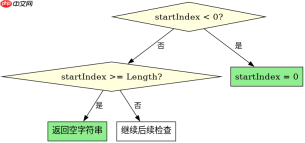
当起始索引小于0或大于字符串长度时,直接调用Substring会立即抛出异常。安全的做法是先判断索引是否在有效范围内,如果无效,可以根据业务需求返回空字符串、原字符串或默认值。例如,使用Math.Max确保索引非负,并使用Math.Min限制索引不超过字符串长度,从而构建一个健壮的截取逻辑。
using System;

public class SafeSubstringExample
{
    public static string SafeSub(string input, int startIndex, int length)
    {
        if (string.IsNullOrEmpty(input))
            return string.Empty;

        // 处理起始索引越界
        if (startIndex = input.Length) return string.Empty;

        // 处理长度越界
        int availableLength = input.Length - startIndex;
        if (length > availableLength)
            length = availableLength;

        return input.Substring(startIndex, length);
    }

    public static void Main()
    {
        string text = "Hello World";
        Console.WriteLine(SafeSub(text, 6, 10)); // 输出: World
        Console.WriteLine(SafeSub(text, -1, 5)); // 输出: Hello
        Console.WriteLine(SafeSub(text, 20, 5)); // 输出: (空)
    }
}
如何避免请求长度超过剩余字符数导致的越界
即使起始索引合法,如果请求的length参数过大,使得startIndex + length超过字符串总长度,Substring同样会抛出ArgumentOutOfRangeException。解决方法是计算从startIndex开始到字符串末尾的实际可用长度,并将请求的length与这个可用长度取最小值。这样既能获取尽可能多的字符,又不会引发异常。


using System;

public class LengthCheckExample
{
    public static string TruncateSafe(string input, int startIndex, int requestedLength)
    {
        if (string.IsNullOrEmpty(input)) return string.Empty;
        if (startIndex = input.Length) return string.Empty;

        int actualLength = Math.Min(requestedLength, input.Length - startIndex);
        return input.Substring(startIndex, actualLength);
    }

    public static void Main()
    {
        string data = "CSharp";
        // 请求从索引2开始取10个字符,实际只有4个可用
        Console.WriteLine(TruncateSafe(data, 2, 10)); // 输出: Sharp
    }
}
基于输入为空字符串时的具体行为分析
当输入字符串为null或空字符串("")时,任何对Substring的调用都会导致问题。如果输入为null,调用Substring会抛出NullReferenceException;如果输入为空,即使索引为0,请求长度大于0也会抛出ArgumentOutOfRangeException。因此,必须在截取前显式检查字符串是否为null或空,这是防止此类边界错误的关键步骤。