






completablefuture.failedfuture() 用于快速创建一个已经处于异常完成状态的 completablefuture。在需要模拟异步任务失败、提前终止流程或作为默认回退值时,直接调用该方法并传入一个 throwable 实例即可。

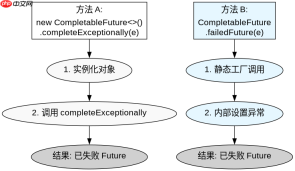
failedFuture 与手动创建的区别是什么
使用 failedFuture 比手动调用 completeExceptionally 更简洁,它返回的是一个已完成且包含异常的 Future,无需额外实例化对象。这种方式常用于工具类中处理空值或无效输入的快速失败场景。

如何捕获和处理 failedFuture 中的异常
当 CompletableFuture 由 failedFuture 创建后,任何后续的链式调用(如 thenApply)都会跳过正常逻辑,直接进入异常处理分支。开发者可以通过 exceptionally 或 handle 方法来统一捕获这些预置的异常。

import java.util.concurrent.CompletableFuture;
import java.util.concurrent.ExecutionException;

public class FailedFutureDemo {
    public static void main(String[] args) throws ExecutionException, InterruptedException {
        // 1. 创建一个已失败的 Future
        CompletableFuture<string> failedFuture = CompletableFuture.failedFuture(new IllegalArgumentException("Input is null"));

        // 2. 尝试添加正常处理逻辑(不会执行)
        CompletableFuture<string> processedFuture = failedFuture.thenApply(result -> result.toUpperCase());

        // 3. 使用 exceptionally 捕获异常
        String finalResult = processedFuture.exceptionally(ex -> "Fallback: " + ex.getCause().getMessage()).join();
        System.out.println(finalResult);

        // 4. 验证异常类型
        try {
            failedFuture.get();
        } catch (ExecutionException e) {
            System.out.println("Caught Exception Type: " + e.getCause().getClass().getSimpleName());
        }
    }
}</string></string>
Java免费学习笔记:立即使用
解锁 Java 大师之旅:从入门到精通的终极指南


