






java中执行批量更新的标准做法是调用 preparedstatement 的 addbatch() 方法将多条 sql 语句加入队列,随后调用 executebatch() 一次性提交。这样做能显著减少网络往返并提升性能。需要注意的是,必须关闭自动提交(autocommit=false)以确保事务完整性,并在操作完成后重置批处理状态。

如何配置 PreparedStatement 以支持批量操作
要实现批量更新,核心在于正确初始化 PreparedStatement 并禁用自动提交。在获取连接后,通过 setAutoCommit(false) 开启手动事务管理,然后使用 prepareStatement(sql) 创建预编译对象。接着,通过循环设置参数并调用 addBatch() 累积数据。最后调用 executeBatch() 执行所有累积的操作,返回一个包含每个语句更新行数的数组。执行完毕后,务必调用 clearBatch() 清空缓存,防止重复执行,并通过 commit() 提交事务。
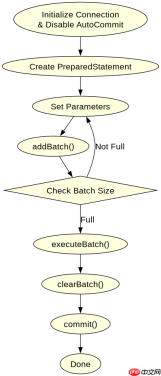
import java.sql.Connection;
import java.sql.DriverManager;
import java.sql.PreparedStatement;

public class BatchUpdateExample {
    public static void main(String[] args) {
        String url = "jdbc:mysql://localhost:3306/test";
        String user = "root";
        String password = "password";

        // 模拟数据
        int[] ids = {1, 2, 3};
        String[] names = {"Alice", "Bob", "Charlie"};

        try (Connection conn = DriverManager.getConnection(url, user, password)) {
            // 1. 关闭自动提交
            conn.setAutoCommit(false);

            String sql = "UPDATE users SET name = ? WHERE id = ?";
            try (PreparedStatement pstmt = conn.prepareStatement(sql)) {
                // 2. 添加批次
                for (int i = 0; i <p>上述代码展示了完整的流程:首先建立连接并关闭自动提交,然后创建 <code>PreparedStatement</code>。在循环中,每次设置参数后调用 <code>addBatch()</code>。执行 <code>executeBatch()</code> 后,程序会打印出更新的行数。如果发生异常,则回滚事务。最后,资源由 try-with-resources 自动关闭。</p><h2>如何处理大批量数据以避免内存溢出</h2><p>当批量数据量极大时,将所有数据一次性加载到内存会导致 <code>OutOfMemoryError</code>。解决策略是将大数据集分割成多个小批次(chunking)。例如,每 1000 条记录作为一个批次进行处理。在每个批次执行完 <code>executeBatch()</code> 后,立即调用 <code>clearBatch()</code> 释放内存,并可以选择性地提交事务或继续累积。这种方式平衡了性能与内存占用。</p><div class="aritcle_card flexRow artxards">
											<div class="artcardd flexRow">
												<a class="aritcle_card_img" rel="nofollow" href="/xiazai/skill12540" title="javascript-typescript-typescript-scaffold"><img
														src="https://img.php.cn/upload/skill/001/246/273/6adaf20e352aa140.jpg" alt="javascript-typescript-typescript-scaffold" onerror="this.onerror='';this.src='/static/lhimages/moren/morentu.png'" ></a>
												<div class="aritcle_card_info flexColumn">
													<a rel="nofollow" href="/xiazai/skill12540" title="javascript-typescript-typescript-scaffold" class="overflowclass">javascript-typescript-typescript-scaffold</a>
													<p class="overflowclass">你是 TypeScript 项目架构专家,专注于脚手架搭建生产就绪的 Node.js 和前端应用。生成包含现代工具链(pnpm、Vite、Next.js)、类型</p>
												</div>
												<a rel="nofollow" href="/xiazai/skill12540" title="javascript-typescript-typescript-scaffold" class="aritcle_card_btn flexRow flexcenter"><b></b><span>下载</span>
												</a>
											</div>
										</div><p><img src="https://img.php.cn/upload/article/001/242/473/179445861824075.png?x-oss-process=image/resize,p_40" alt="Java PreparedStatement 怎么执行批量更新"></p><pre class="brush:php;toolbar:false;">import java.sql.Connection;
import java.sql.DriverManager;
import java.sql.PreparedStatement;

public class ChunkedBatchUpdate {
    public static void main(String[] args) {
        String url = "jdbc:mysql://localhost:3306/test";
        String user = "root";
        String password = "password";

        // 模拟大量数据
        int totalRecords = 5000;
        int batchSize = 1000;

        try (Connection conn = DriverManager.getConnection(url, user, password)) {
            conn.setAutoCommit(false);
            String sql = "UPDATE users SET status = ? WHERE id = ?";

            try (PreparedStatement pstmt = conn.prepareStatement(sql)) {
                for (int i = 1; i <p>该示例演示了分块处理逻辑:设定总记录数为 5000,批次大小为 1000。在循环中,每处理 1000 条记录就执行一次 <code>executeBatch()</code> 和 <code>clearBatch()</code>,并提交事务。这样确保内存中始终只保留少量数据。对于最后剩余的不足一批次的记录,再次执行 <code>executeBatch()</code> 并清理。这种方法适用于任何大规模数据处理场景,有效避免内存溢出。</p><h2>executeBatch() 返回的 int[] 数组代表什么含义</h2><p><code>executeBatch()</code> 返回的 <code>int[]</code> 数组表示每个 SQL 语句在执行后的更新行数。数组中的每个元素对应 <code>addBatch()</code> 中添加的一条语句。如果某个语句成功执行,其值为更新的行数;如果语句被忽略(如某些驱动对 DDL 的处理),可能返回 <code>SUCCESS_NO_INFO</code>(-2);如果执行失败,抛出异常。因此,检查返回值有助于确认每条语句的执行结果,特别是在需要精确控制更新计数的场景中。</p>
Java免费学习笔记:立即使用
解锁 Java 大师之旅:从入门到精通的终极指南


