






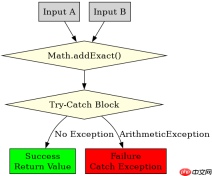
java 中处理整数溢出主要依靠 math 类提供的检查型算术方法,如 math.addexact()、math.multiplyexact() 等。这些方法在检测到运算结果超出 int 或 long 范围时,会直接抛出 arithmeticexception 异常,从而阻止静默溢出导致的错误数据。对于需要返回特殊值(如最大值)而非抛出的场景,可以使用 math.addexact() 配合 try-catch 块进行捕获处理,或者手动使用位移和比较逻辑来检测溢出。

如何安全地执行加法运算并捕获溢出
要安全地执行加法运算并捕获溢出,应调用 Math.addExact(int, int) 或 Math.addExact(long, long)。该方法会在结果超出目标类型范围时抛出 ArithmeticException。开发者只需将运算包裹在 try-catch 块中即可捕获该异常并进行相应处理,例如记录日志或返回默认值。这种方式比手动计算溢出条件更简洁且不易出错。
public class SafeAddition {
    public static void main(String[] args) {
        int a = Integer.MAX_VALUE;
        int b = 1;
        try {
            int result = Math.addExact(a, b);
            System.out.println("Result: " + result);
        } catch (ArithmeticException e) {
            System.out.println("Overflow detected!");
        }
    }
}
运行上述代码,由于 Integer.MAX_VALUE + 1 会导致溢出,程序将输出 "Overflow detected!" 而不是错误的负数值。这验证了 Math.addExact() 能有效拦截溢出行为。
乘法运算中的溢出检测与处理
乘法运算同样存在溢出风险,推荐使用 Math.multiplyExact(int, int) 或 Math.multiplyExact(long, long)。与加法类似,当乘积超出 int 或 long 的表示范围时,该方法会抛出 ArithmeticException。在处理大规模数据或累积计算时,这种显式的溢出检查能确保数据的准确性,避免因溢出导致的逻辑错误。


public class SafeMultiplication {
    public static void main(String[] args) {
        long a = Long.MAX_VALUE;
        long b = 2;
        try {
            long result = Math.multiplyExact(a, b);
            System.out.println("Result: " + result);
        } catch (ArithmeticException e) {
            System.out.println("Multiplication overflow!");
        }
    }
}
执行此代码,因为 Long.MAX_VALUE * 2 远超 long 的最大值,程序将捕获异常并输出 "Multiplication overflow!"。这表明 Math.multiplyExact() 能够正确识别并处理乘法溢出情况。
当输入为最大整数值时加法的具体表现
当输入为 Integer.MAX_VALUE 时,任何正数加法都会导致溢出。此时 Math.addExact() 会立即抛出 ArithmeticException。如果未捕获该异常,程序将终止并打印堆栈跟踪信息。在实际应用中,建议在业务逻辑层捕获此异常,并根据需求决定是回滚操作、返回错误码还是使用备用算法(如切换到 BigInteger)。
Java免费学习笔记:立即使用
解锁 Java 大师之旅:从入门到精通的终极指南


