






completablefuture 中带有 async 后缀的方法(如 thenapplyasync、runasync)的核心作用是显式指定任务在异步线程池中执行,而不是在当前调用线程中同步完成。默认情况下,不带 async 的方法会在上一个阶段完成的同一个线程中执行,这可能导致阻塞或性能瓶颈;而使用 async 方法可以将耗时操作卸载到后台线程,实现真正的并行处理。
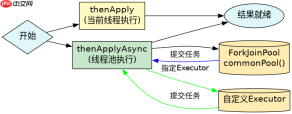
默认执行与异步执行在线程分配上有何区别
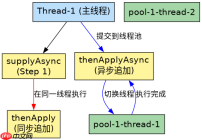
不带 Async 的方法会在当前线程直接运行,而带 Async 的方法会提交到指定的 Executor 或默认的 ForkJoinPool。这种区别决定了程序的并发模型:同步执行适合轻量级计算,异步执行适合 I/O 密集型或 CPU 密集型任务。
import java.util.concurrent.CompletableFuture;
import java.util.concurrent.ExecutorService;
import java.util.concurrent.Executors;

public class AsyncDemo {
    public static void main(String[] args) throws Exception {
        ExecutorService executor = Executors.newFixedThreadPool(2);

        // 同步方式:在当前线程执行
        CompletableFuture<string> syncFuture = CompletableFuture.supplyAsync(() -> "Step 1", executor)
                .thenApply(result -> { // 这里会在 Step 1 的线程中执行
                    System.out.println("Sync: " + Thread.currentThread().getName());
                    return result + " - Sync";
                });

        // 异步方式:切换到新线程执行
        CompletableFuture<string> asyncFuture = CompletableFuture.supplyAsync(() -> "Step 1", executor)
                .thenApplyAsync(result -> { // 这里会提交到线程池的新线程
                    System.out.println("Async: " + Thread.currentThread().getName());
                    return result + " - Async";
                });

        System.out.println(syncFuture.get());
        System.out.println(asyncFuture.get());
        executor.shutdown();
    }
}</string></string>
不指定 Executor 时 Async 方法使用哪个线程池
当调用 thenApplyAsync() 等重载方法且不传入 Executor 参数时,Java 默认使用 ForkJoinPool.commonPool()。这个线程池由 JVM 共享,适用于大量短小的异步任务,但在某些高负载场景下可能会与其他共享该池的任务产生竞争。

import java.util.concurrent.CompletableFuture;
import java.util.concurrent.ForkJoinPool;

public class DefaultPoolDemo {
    public static void main(String[] args) throws Exception {
        CompletableFuture<string> future = CompletableFuture.supplyAsync(() -> {
            System.out.println("Using common pool: " + Thread.currentThread().getName());
            return "Result";
        });
        System.out.println(future.get());
        System.out.println("Common Pool Size: " + ForkJoinPool.commonPool().getParallelism());
    }
}</string>
Async 方法返回的 CompletableFuture 状态如何流转
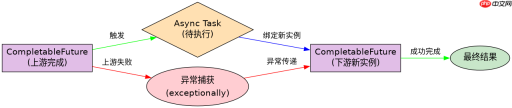
无论是否使用 Async 后缀,返回的都是一个新的 CompletableFuture 实例。该实例的状态流转遵循链式依赖:只有当上游任务成功完成时,下游的 Async 任务才会被触发。如果上游异常,下游不会执行,除非配置了 exceptionally 或 handle 逻辑。这种设计保证了错误传播的清晰性。
Java免费学习笔记:立即使用
解锁 Java 大师之旅:从入门到精通的终极指南


