






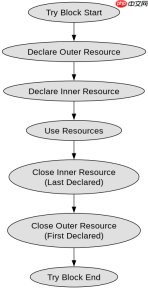
java try-with-resources 中资源依赖顺序通过声明变量的先后顺序来管理,后声明的资源先关闭。在 try 括号内按依赖关系从外到内声明资源,例如先声明外层连接再声明内层流,这样能确保内层资源在外层资源之前被安全释放。

try-with-resources 的关闭顺序规则是什么
关闭顺序与声明顺序相反,即最后声明的资源最先调用 close()。这种机制保证了嵌套资源的正确清理,避免外层资源关闭导致内层资源无法访问的问题。
import java.io.*;

public class ResourceOrder {
    public static void main(String[] args) {
        // 模拟资源关闭顺序
        try (BufferedInputStream bis = new BufferedInputStream(
                new FileInputStream("test.txt"))) {
            System.out.println("Inside try block");
        } catch (IOException e) {
            e.printStackTrace();
        }
    }
}
预期输出:
Inside try block
(无异常时正常退出)
如何验证资源关闭的实际执行顺序
可以通过自定义实现 AutoCloseable 接口的类,在 close() 方法中打印日志来验证实际关闭顺序。这有助于理解编译器生成的 finally 块中的资源清理逻辑。


import java.io.*;

public class CustomResource implements AutoCloseable {
    private String name;

    public CustomResource(String name) {
        this.name = name;
        System.out.println(name + " created");
    }

    @Override
    public void close() throws Exception {
        System.out.println(name + " closed");
    }

    public static void main(String[] args) {
        try (CustomResource r1 = new CustomResource("R1");
             CustomResource r2 = new CustomResource("R2")) {
            System.out.println("Using resources");
        } catch (Exception e) {
            e.printStackTrace();
        }
    }
}
预期输出:
R1 created
R2 created
Using resources
R2 closed
R1 closed
当资源初始化失败时如何处理依赖关系
如果某个资源在初始化时抛出异常,后续资源不会被创建,已创建的资源仍会按顺序关闭。这种设计确保了部分初始化的资源也能得到正确清理,避免资源泄漏。
Java免费学习笔记:立即使用
解锁 Java 大师之旅:从入门到精通的终极指南


