






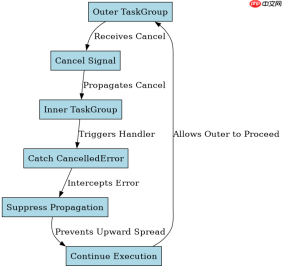
在python 3.11中,解决 taskgroup 嵌套运行时取消级联的核心做法是:在内部 taskgroup 的上下文管理器退出时,显式捕获并处理 cancellederror,防止其向上传播导致外部任务也被意外取消。具体而言,需要在内部 async with 块中使用 try...except 结构拦截 cancellederror,并根据业务逻辑决定是忽略、记录日志还是转换为其他异常。这样做可以确保外部 taskgroup 仅在其自身被取消或发生其他错误时才终止,而不会因内部任务的正常取消流程而被连带影响。
如何避免内部TaskGroup取消导致外部任务中断?
要避免内部 TaskGroup 的取消传播到外部,必须在内部上下文的退出阶段拦截 CancelledError。当外部任务被取消时,它会向所有子任务发送取消信号,如果内部 TaskGroup 没有处理这个异常,它会将 CancelledError 重新抛出,从而触发外部 TaskGroup 的清理逻辑,导致整个层级链断裂。通过在内部块中捕获该异常,可以切断这种级联效应。

import asyncio
from contextlib import asynccontextmanager

@asynccontextmanager
async def safe_inner_task_group():
    async with asyncio.TaskGroup() as inner_tg:
        try:
            # 模拟内部任务
            task = inner_tg.create_task(asyncio.sleep(10))
            await task
        except asyncio.CancelledError:
            # 捕获内部取消,防止向上传播
            print("Inner task cancelled, suppressing propagation.")
            # 这里可以选择忽略,或者执行清理逻辑
            raise ExceptionGroup("Inner cleanup", [])
        except BaseException as e:
            # 其他异常正常抛出
            raise

async def outer_task():
    try:
        async with asyncio.TaskGroup() as outer_tg:
            outer_tg.create_task(safe_inner_task_group())
            # 外部任务继续运行
            await asyncio.sleep(5)
    except* asyncio.CancelledError as eg:
        print(f"Outer cancelled: {eg.exceptions}")

asyncio.run(outer_task())
上述代码展示了如何在内部 TaskGroup 中通过 try...except 捕获 CancelledError。当内部任务被取消时,程序会打印提示信息并抛出一个空的 ExceptionGroup 以模拟清理完成,而不是让 CancelledError 继续传播。这样,外部 TaskGroup 不会因为内部取消而立即终止,而是可以继续执行其后续逻辑或等待其他任务完成。
如何处理嵌套TaskGroup中的异常聚合?
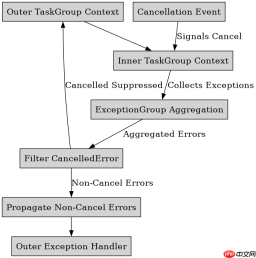
在处理嵌套 TaskGroup 时,异常聚合机制会自动将多个异常打包为 ExceptionGroup。如果内部 TaskGroup 中发生了非取消类的异常,这些异常会被收集并向上层传递。为了正确区分取消和其他异常,可以在内部块中分别处理 CancelledError 和 BaseException。这样可以确保只有真正的错误才会导致外层任务失败,而取消操作可以被静默处理。

Nodriver是Undetected-Chromedriver的官方继承者,提供异步浏览器自动化功能,可直接与Chrome DevTools Protocol通信,无需Selenium或WebDriver依赖。专为规避反机器人系统(包括Cloudflare和Imperva)的隐蔽网络自动化而构建。
import asyncio

async def nested_exception_handling():
    try:
        async with asyncio.TaskGroup() as outer_tg:
            async with asyncio.TaskGroup() as inner_tg:
                try:
                    inner_tg.create_task(asyncio.sleep(1))
                except asyncio.CancelledError:
                    print("Inner cancelled")
                except BaseException as e:
                    print(f"Inner error: {e}")
                    raise
            # 外部任务继续
            await asyncio.sleep(2)
    except* asyncio.CancelledError as eg:
        print(f"Outer cancelled: {eg.exceptions}")
    except* BaseException as eg:
        print(f"Outer error group: {eg.exceptions}")

asyncio.run(nested_exception_handling())
这段代码演示了如何在嵌套结构中分别处理取消和异常。内部 TaskGroup 捕获 CancelledError 并打印信息,而其他异常则被重新抛出。外部 TaskGroup 使用 except* 语法来解包 ExceptionGroup,从而能够区分不同类型的异常。这种处理方式确保了异常处理的精确性,避免了误判取消为错误。
基于程序中某个输入、条件或结果的具体问题
在上述代码中,当内部 TaskGroup 被取消时,我们选择抛出一个空的 ExceptionGroup 来模拟清理完成。这一行为的具体结果是:外部 TaskGroup 不会收到 CancelledError,因此不会触发其自身的取消逻辑。这意味着外部任务可以继续执行,直到其自然结束或被其他原因取消。这种设计适用于需要保持外部任务稳定性的场景,例如在微服务架构中,内部服务的取消不应影响主服务的运行。
Python免费学习笔记(深入):立即使用
在学习笔记中,你将探索 Python 的核心概念和高级技巧!


