





javascript 对象方法中 this 指向错误通常是因为方法被作为独立函数调用,导致 this 丢失了上下文。解决该问题的核心做法是:在构造函数或类定义时,通过箭头函数、.bind() 或显式赋值将方法绑定到正确的实例上,确保回调执行时 this 始终指向原对象。

为什么普通函数会导致 this 指向丢失?
当对象的方法被提取出来单独调用,或者作为事件监听器、定时器回调传入时,JavaScript 引擎会将其视为普通函数调用。此时 this 默认指向全局对象(浏览器中为 window)或 undefined(严格模式下),从而无法访问对象的属性。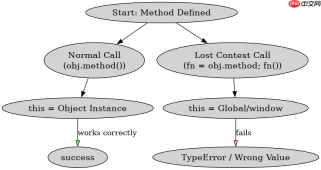
class User {
  constructor(name) {
    this.name = name;
    // 普通函数定义
    this.greet = function() {
      console.log('Hello, ' + this.name);
    };
  }
}

const user = new User('Alice');
// 直接调用,this 指向 user
user.greet(); // Hello, Alice

// 提取方法后调用,this 丢失
const fn = user.greet;
fn(); // undefined (非严格模式可能指向 window)
如何通过 bind 和箭头函数修复 this 指向?
修复 this 指向主要有两种可靠方式:使用 .bind() 创建新函数并固定上下文,或在定义时使用箭头函数利用词法作用域继承 this。箭头函数更简洁且无需额外处理返回值,而 .bind() 适合需要保留原始函数引用的场景。

OpenAI Agents SDK JavaScript 工作流工具包
下载
一个基于源码的 OpenAI Agents SDK JavaScript 和 TypeScript 技术文档。涵盖了代理编排、工具、转接、追踪以及实际安装路径。
class User {
  constructor(name) {
    this.name = name;
    // 方式一:使用箭头函数
    this.greetArrow = () => {
      console.log('Hello, ' + this.name); // this 指向 User 实例
    };

    // 方式二:使用 bind
    this.greetBind = function() {
      console.log('Hello, ' + this.name);
    }.bind(this);
  }
}

const user = new User('Bob');
const fn1 = user.greetArrow;
const fn2 = user.greetBind;

fn1(); // Hello, Bob
fn2(); // Hello, Bob
在异步回调中如何保持 this 的正确性?
在异步操作如 setTimeout 或 Promise 回调中,如果直接使用对象方法,同样会面临 this 丢失问题。最佳实践是在定义方法时就使用箭头函数,或在调用前预先绑定。这样可以确保无论回调何时执行,this 都稳定指向创建时的对象实例,避免运行时错误。
Java免费学习笔记:立即使用
解锁 Java 大师之旅:从入门到精通的终极指南