






在java中避免阻塞的核心做法是使用非阻塞的异步api,将耗时任务提交到独立的线程池执行,并通过`completablefuture`提供的链式回调机制处理结果。具体而言,应使用`supplyasync()`或`runasync()`方法,并传入自定义的`executor`(如`forkjoinpool.commonpool()`或专用线程池),确保主线程不被挂起。若需等待结果,必须使用`getnow()`、`join()`配合超时控制或`ortimeout()`等策略,严禁在主线程中无限制地调用`get()`。

supplyAsync() 如何指定线程池以避免默认池饥饿
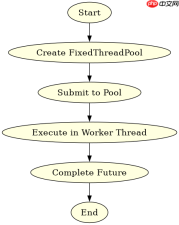
使用 supplyAsync() 时若不传参,默认使用 ForkJoinPool.commonPool(),该池线程数受CPU核心数限制且易被其他并行流占用导致饥饿。为避免此问题,应显式传入一个专用的 ExecutorService,如固定大小的线程池,从而隔离业务逻辑与系统级并行计算资源。
import java.util.concurrent.*;

public class AsyncExample {
    public static void main(String[] args) throws Exception {
        // 创建专用线程池,避免使用 commonPool()
        ExecutorService executor = Executors.newFixedThreadPool(4);

        // 提交异步任务
        CompletableFuture<string> future = CompletableFuture.supplyAsync(() -> {
            try { Thread.sleep(1000); } catch (InterruptedException e) {}
            return "Result";
        }, executor);

        // 获取结果(非阻塞方式应在回调中处理)
        String result = future.get(); // 注意:此处为同步阻塞获取,仅用于演示
        System.out.println(result);

        executor.shutdown();
    }
}</string>
上述代码通过 Executors.newFixedThreadPool(4) 创建了独立线程池,避免了 ForkJoinPool 的资源竞争。虽然 future.get() 本身是阻塞的,但任务的执行阶段完全非阻塞,主线程仅在最后一步等待结果。在实际应用中,应优先使用 thenApply() 等回调方法替代 get() 以实现真正的非阻塞流水线。
如何通过 orTimeout() 防止长时间阻塞
当必须等待异步结果时,直接使用 get() 可能导致线程永久挂起。Java 9 引入的 orTimeout() 方法可在指定时间内未完成任务时抛出 TimeoutException,从而快速失败并释放资源。该方法返回一个新的 CompletableFuture,原任务继续运行但不影响当前流的异常处理逻辑。

FilePond 是一个 JavaScript 文件上传库,支持通过拖拽、粘贴和 API 方式处理文件、目录、URL 和 Data URI。它包含内置的图像优化功能、异步分块上传功能,并提供了适用于 React、Vue、Angular 和 Svelte 的适配器。

import java.util.concurrent.*;

public class TimeoutExample {
    public static void main(String[] args) {
        ExecutorService executor = Executors.newSingleThreadExecutor();

        CompletableFuture<string> future = CompletableFuture.supplyAsync(() -> {
            try { Thread.sleep(5000); } catch (InterruptedException e) {}
            return "Slow Result";
        }, executor);

        // 设置500毫秒超时
        future.orTimeout(500, TimeUnit.MILLISECONDS)
              .exceptionally(ex -> {
                  if (ex instanceof TimeoutException) {
                      return "Timed out";
                  }
                  return "Error: " + ex.getMessage();
              })
              .thenAccept(System.out::println);

        executor.shutdown();
    }
}</string>
该示例展示了 orTimeout() 的实际用法:任务执行超过500毫秒后触发异常,由 exceptionally() 捕获并返回降级结果。这种方式避免了线程无限期等待,同时保持了异步流程的完整性。需注意 orTimeout() 不会取消底层任务,仅影响当前 CompletableFuture 的状态转换。
当异步任务抛出异常时如何处理而不阻塞主线程
异步任务中的异常不会直接传播到主线程,而是被封装在 CompletableFuture 中。若未处理,调用 get() 或 join() 时会抛出 ExecutionException。为避免阻塞和崩溃,应使用 exceptionally() 或 handle() 提供默认值或错误路径,确保主线程能继续执行后续逻辑。
import java.util.concurrent.*;

public class ExceptionHandlingExample {
    public static void main(String[] args) {
        CompletableFuture<string> future = CompletableFuture.supplyAsync(() -> {
            throw new RuntimeException("Simulated error");
        });

        future.exceptionally(ex -> {
            System.err.println("Caught exception: " + ex.getMessage());
            return "Default Value";
        }).thenAccept(System.out::println);

        // 主线程立即返回,不阻塞
        System.out.println("Main thread continues...");
    }
}</string>
此代码中,supplyAsync() 抛出的异常被 exceptionally() 捕获,返回默认字符串。主线程打印“Main thread continues...”后立即结束,证明异常处理未造成阻塞。这种模式适用于需要容错能力的异步场景,确保单个任务失败不影响整体流程。
Java免费学习笔记:立即使用
解锁 Java 大师之旅:从入门到精通的终极指南


