






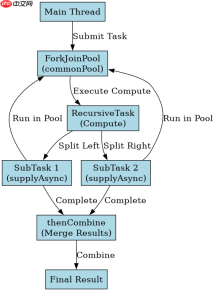
java 中利用 forkjoinpool 分治处理 completablefuture 任务,核心在于将大任务拆分为小任务并行执行,并在子任务完成后合并结果。具体做法是继承 forkjointask(通常使用 recursivetask)实现 compute() 方法,在内部通过 completablefuture.supplyasync() 提交子任务并指定 forkjoinpool.commonpool() 作为执行器,最后调用 combine() 或手动合并 thencombine() 来汇总结果。
如何拆分任务并提交到公共线程池
要实现分治,首先需要定义一个递归的任务类。该类继承自 RecursiveTask,并重写 compute() 方法。在 compute() 中,判断当前任务规模是否小于阈值,若小于则直接同步计算;否则,将任务拆分为两个子任务,并使用 CompletableFuture.supplyAsync() 异步执行它们。关键在于必须传入 ForkJoinPool.commonPool() 作为 Executor 参数,以确保子任务在 ForkJoinPool 的线程池中运行,从而充分利用 CPU 资源进行并行处理。

import java.util.concurrent.*;

public class ParallelSumTask extends RecursiveTask<long> {
    private final long[] array;
    private final int start;
    private final int end;
    private static final int THRESHOLD = 1000;

    public ParallelSumTask(long[] array, int start, int end) {
        this.array = array;
        this.start = start;
        this.end = end;
    }

    @Override
    protected Long compute() {
        int length = end - start;
        if (length  leftFuture = CompletableFuture.supplyAsync(leftTask::compute, ForkJoinPool.commonPool());
            CompletableFuture<long> rightFuture = CompletableFuture.supplyAsync(rightTask::compute, ForkJoinPool.commonPool());

            // 等待并合并结果
            return leftFuture.thenCombine(rightFuture, Long::sum).join();
        }
    }
}</long></long>
上述代码展示了如何将数组求和任务递归拆分。当数组长度超过 THRESHOLD 时,创建左右两个子任务,并通过 supplyAsync 将其提交给公共线程池。主任务通过 thenCombine 等待两个子任务完成并将结果相加。这种模式确保了任务在 ForkJoinPool 的工作窃取队列中被高效调度。
如何避免 ForkJoinPool 中的死锁与阻塞
在使用 CompletableFuture 结合 ForkJoinPool 时,最常见的风险是死锁。如果子任务在等待另一个同样在 ForkJoinPool 中运行的任务完成,而该任务的执行线程被当前正在运行的任务占用,就会导致死锁。为了避免这种情况,应确保子任务之间没有循环依赖,并且尽量保持子任务的计算轻量级。此外,可以使用 CompletableFuture.allOf() 来并行等待多个独立子任务,而不是在单个 compute() 中串行等待,这样可以提高线程利用率并减少阻塞风险。

FilePond 是一个 JavaScript 文件上传库,支持通过拖拽、粘贴和 API 方式处理文件、目录、URL 和 Data URI。它包含内置的图像优化功能、异步分块上传功能,并提供了适用于 React、Vue、Angular 和 Svelte 的适配器。
import java.util.concurrent.*;
import java.util.stream.*;

public class SafeParallelProcessing {
    public static void main(String[] args) throws Exception {
        int[] data = new int[10000];
        // 初始化数据...

        // 使用 parallelStream 简化分治逻辑
        long result = Arrays.stream(data)
            .parallel()
            .mapToLong(x -> x * x) // 每个元素平方
            .sum();                 // 求和

        System.out.println("Result: " + result);
    }
}
虽然上面的示例使用了 parallelStream,但其底层同样依赖于 ForkJoinPool。对于更复杂的场景,如需要处理不同大小的子任务或具有依赖关系的任务,建议显式使用 CompletableFuture 链。例如,先启动所有子任务,然后使用 allOf().thenApply() 统一处理结果。这样可以避免在 compute() 方法中因等待子任务而阻塞工作线程,从而降低死锁概率。同时,确保子任务不执行长时间阻塞操作(如 I/O),否则会影响整个线程池的效率。
如何处理子任务执行过程中的异常
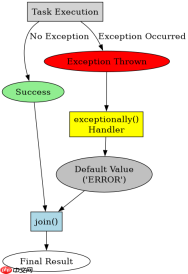
在分治过程中,子任务可能会抛出异常。由于 CompletableFuture 是异步执行的,异常会被封装在 CompletionException 中。为了正确处理异常,应在每个子任务的 supplyAsync 调用后添加 exceptionally() 处理器,或者在最终合并时使用 handle() 方法。这样可以在不中断整个流程的情况下捕获并记录错误,或者提供默认值。此外,建议在 compute() 方法中使用 try-catch 块包裹子任务的启动和合并逻辑,以防止未捕获的异常导致任务状态不一致。
import java.util.concurrent.*;

public class RobustParallelTask extends RecursiveTask<string> {
    private final String input;

    public RobustParallelTask(String input) {
        this.input = input;
    }

    @Override
    protected String compute() {
        try {
            // 模拟复杂计算
            CompletableFuture<string> future = CompletableFuture.supplyAsync(() -> {
                if (input == null) throw new IllegalArgumentException("Input is null");
                return process(input);
            }, ForkJoinPool.commonPool());

            return future.exceptionally(ex -> {
                System.err.println("Error processing: " + ex.getMessage());
                return "ERROR";
            }).join();
        } catch (Exception e) {
            return "FATAL_ERROR";
        }
    }

    private String process(String s) {
        return s.toUpperCase();
    }
}</string></string>
在上述代码中,exceptionally() 方法用于捕获子任务中的异常,并返回一个默认字符串 "ERROR"。这确保了即使某个子任务失败,整个分治过程也不会崩溃,而是返回一个标记错误的结果。在实际应用中,可以根据业务需求选择重试、跳过或终止策略。通过这种方式,可以构建出更加健壮的分治算法,适用于大规模数据处理和分布式计算场景。
Java免费学习笔记:立即使用
解锁 Java 大师之旅:从入门到精通的终极指南


