






spring boot 全局异常处理捕获隔离级别异常,核心在于将数据库驱动抛出的 sqlexception 映射为 spring 的 dataaccessexception 体系,并在 @controlleradvice 中拦截具体的子类。由于不同数据库对隔离级别的支持程度不同,通常 sqlstatecodes 或错误码会因方言而异,因此建议优先基于 sqlexception 的 sqlstate 前缀进行通用匹配,再针对特定数据库(如 mysql、postgresql)的错误码做细化处理。这样可以在不侵入业务代码的前提下,统一返回友好的 json 错误或页面提示。

如何配置全局异常处理器以拦截数据访问异常
通过继承 ResponseEntityExceptionHandler 或直接使用 @RestControllerAdvice,可以覆盖默认的异常转换逻辑。在方法参数中声明 SQLException 或其父类 DataAccessException,Spring MVC 会自动将匹配的异常路由到该方法。对于隔离级别冲突,重点在于识别出由并发事务引起的特定错误状态码。
import org.springframework.http.HttpStatus;
import org.springframework.http.ResponseEntity;
import org.springframework.web.bind.annotation.ExceptionHandler;
import org.springframework.web.bind.annotation.RestControllerAdvice;
import org.springframework.dao.DataIntegrityViolationException;
import java.sql.SQLException;

@RestControllerAdvice
public class GlobalExceptionHandler {

    @ExceptionHandler(SQLException.class)
    public ResponseEntity<string> handleSqlException(SQLException ex) {
        String sqlState = ex.getSQLState();
        // 检查是否为锁超时或死锁相关的隔离级别问题
        if (sqlState != null && sqlState.startsWith("40")) {
            return ResponseEntity.status(HttpStatus.CONFLICT)
                    .body("Transaction isolation conflict: Deadlock or timeout detected.");
        }
        return ResponseEntity.status(HttpStatus.INTERNAL_SERVER_ERROR)
                .body("Database error: " + ex.getMessage());
    }
}</string>
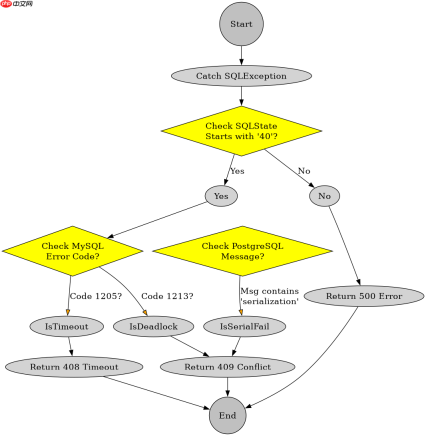
上述代码展示了基本的拦截结构。当数据库抛出 SQLException 时,getSQLState() 返回的五位代码中,40xxx 系列专门用于表示“事务被中止”的情况,这通常与隔离级别设置过高导致的锁竞争有关。例如,MySQL 中的 40001 代表死锁,40007 代表乐观锁失败。通过判断 SQLState 的前两位,可以实现跨数据库的初步过滤。
针对不同数据库的隔离级别错误码如何进行差异化处理
虽然 SQLState 提供了通用标准,但实际开发中往往需要更精确的错误信息。MySQL 和 PostgreSQL 在隔离级别异常上的表现略有不同。MySQL 主要使用 ERROR 1213 (Deadlock found) 和 ERROR 1205 (Lock wait timeout exceeded)。而 PostgreSQL 则可能抛出 serialization_failure 异常,其 SQLState 为 40001。为了准确捕获,需要在 GlobalExceptionHandler 中结合 ErrorCode 和 Message 内容进行二次判断。

import org.springframework.http.HttpStatus;
import org.springframework.http.ResponseEntity;
import org.springframework.web.bind.annotation.ExceptionHandler;
import org.springframework.web.bind.annotation.RestControllerAdvice;
import java.sql.SQLException;

@RestControllerAdvice
public class DatabaseExceptionHandler {

    @ExceptionHandler(SQLException.class)
    public ResponseEntity<string> handleIsolationLevelConflict(SQLException ex) {
        int errorCode = ex.getErrorCode();
        String sqlState = ex.getSQLState();
        String message = ex.getMessage();

        // MySQL 死锁
        if (errorCode == 1213 || "40001".equals(sqlState)) {
            return ResponseEntity.status(409).body("Deadlock detected. Please retry.");
        }
        // MySQL 锁等待超时
        if (errorCode == 1205) {
            return ResponseEntity.status(408).body("Lock wait timeout. Transaction too long.");
        }
        // PostgreSQL 序列化失败
        if ("40001".equals(sqlState) && message.contains("could not serialize access")) {
            return ResponseEntity.status(409).body("Serialization failure in PostgreSQL. Retry transaction.");
        }

        return ResponseEntity.status(500).body("Unexpected DB error: " + message);
    }
}</string>
这段代码演示了如何根据具体的错误码和消息内容来区分不同的隔离级别冲突场景。在实际应用中,建议将这些逻辑封装为一个工具类,以便在多个项目中复用。同时,注意不要过度依赖错误码,因为不同版本的数据库可能会调整错误码的含义,SQLState 仍然是更可靠的依据。
捕获到隔离级别异常后如何重试事务
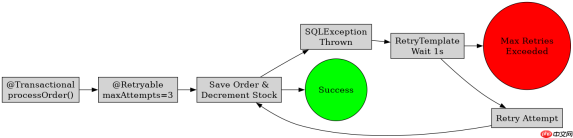
一旦在全局异常处理器中识别出隔离级别冲突,除了返回错误信息外,更优雅的做法是触发事务重试机制。Spring 提供了 RetryTemplate 来简化这一过程。可以在服务层使用 @Transactional 注解,并结合 Retryable 注解来实现自动重试。当 GlobalExceptionHandler 捕获到异常并记录日志后,如果业务逻辑允许,可以向上抛出特定的运行时异常,由重试框架拦截并重试整个事务块。
import org.springframework.retry.annotation.Retryable;
import org.springframework.stereotype.Service;
import java.sql.SQLException;

@Service
public class OrderService {

    @Retryable(value = {SQLException.class}, maxAttempts = 3, backoff = @Backoff(delay = 1000))
    @Transactional
    public void processOrder(Order order) {
        // 业务逻辑,可能引发隔离级别异常
        orderRepository.save(order);
        inventoryRepository.decrementStock(order.getItemId());
    }
}
在这个示例中,@Retryable 注解指定了当 SQLException 发生时,最多重试 3 次,每次间隔 1 秒。这有效地缓解了高并发下因隔离级别设置过高(如 Serializable 或 Repeatable Read)导致的短暂锁冲突问题。需要注意的是,重试机制会增加系统的复杂性,应仅在确实存在并发冲突风险且业务可接受重试延迟的场景下使用。


