






Java 线程池中 RUNNING 状态是什么
在 java 的 threadpoolexecutor 中,running 是线程池生命周期中的第一个状态。当线程池被创建时,它默认处于 running 状态。在这个状态下,线程池可以接收新提交的任务,并且能够处理阻塞队列中等待执行的任务。
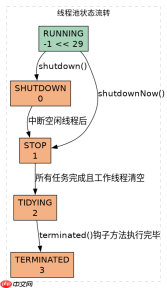
如何判断线程池是否处于 RUNNING 状态
要判断一个线程池是否处于 RUNNING 状态,可以通过检查其内部维护的状态变量来实现。这个状态变量通常是一个原子整数,通过位运算来存储和更新状态信息。

import java.util.concurrent.ThreadPoolExecutor;

public class ThreadPoolStatusChecker {
    public static void main(String[] args) {
        // 创建一个固定大小的线程池
        ThreadPoolExecutor executor = new ThreadPoolExecutor(5, 5, 0L, TimeUnit.MILLISECONDS,
                new LinkedBlockingQueue());

        // 检查线程池是否处于 RUNNING 状态
        if (isRunning(executor)) {
            System.out.println("线程池处于 RUNNING 状态");
        } else {
            System.out.println("线程池不处于 RUNNING 状态");
        }

        // 关闭线程池
        executor.shutdown();

        // 再次检查线程池状态
        if (isRunning(executor)) {
            System.out.println("线程池处于 RUNNING 状态");
        } else {
            System.out.println("线程池不处于 RUNNING 状态");
        }
    }

    private static boolean isRunning(ThreadPoolExecutor executor) {
        try {
            // 使用反射获取线程池的内部状态字段
            Field stateField = ThreadPoolExecutor.class.getDeclaredField("ctl");
            stateField.setAccessible(true);
            long ctlValue = ((AtomicInteger) stateField.get(executor)).get();

            // 提取高3位的运行状态
            int runState = (int) (ctlValue & ~CAPACITY);

            // 判断是否为 RUNNING 状态
            return runState == RUNNING;
        } catch (Exception e) {
            throw new RuntimeException("无法获取线程池状态", e);
        }
    }

    private static final int CAPACITY = (1 <p>上述代码展示了如何通过反射机制来获取线程池的内部状态,并判断其是否处于 <code>RUNNING</code> 状态。需要注意的是,这种方法依赖于线程池的内部实现细节,因此在不同版本的 JDK 中可能会有所不同。</p><h2>基于程序中某个输入、条件或结果的具体问题</h2><p>在上述代码中,我们使用了反射来获取线程池的内部状态。然而,这种方法并不是官方推荐的做法,因为它可能会随着 JDK 版本的更新而失效。那么,有没有更可靠的方法来判断线程池是否处于 <code>RUNNING</code> 状态呢?</p><div class="aritcle_card flexRow artxards">
											<div class="artcardd flexRow">
												<a class="aritcle_card_img" rel="nofollow" href="/xiazai/skill13095" title="Build Java agent transport gateways with Atmosphere"><img
														src="https://img.php.cn/upload/skill/001/246/273/6adaf20e352aa140.jpg" alt="Build Java agent transport gateways with Atmosphere" onerror="this.onerror='';this.src='/static/lhimages/moren/morentu.png'" ></a>
												<div class="aritcle_card_info flexColumn">
													<a rel="nofollow" href="/xiazai/skill13095" title="Build Java agent transport gateways with Atmosphere" class="overflowclass">Build Java agent transport gateways with Atmosphere</a>
													<p class="overflowclass">使用Atmosphere构建通过WebSocket、SSE、gRPC、WebTransport、MCP、A2A和AG-UI流传输的JVM代理网关,并带有治理钩子。</p>
												</div>
												<a rel="nofollow" href="/xiazai/skill13095" title="Build Java agent transport gateways with Atmosphere" class="aritcle_card_btn flexRow flexcenter"><b></b><span>下载</span>
												</a>
											</div>
										</div><p>答案是肯定的。我们可以通过调用线程池提供的公开 API 来判断其状态。例如,可以使用 <code>isShutdown()</code> 和 <code>isTerminated()</code> 方法来间接判断线程池是否处于 <code>RUNNING</code> 状态。</p><pre class="brush:php;toolbar:false;">import java.util.concurrent.ThreadPoolExecutor;

public class ThreadPoolStatusCheckerV2 {
    public static void main(String[] args) {
        // 创建一个固定大小的线程池
        ThreadPoolExecutor executor = new ThreadPoolExecutor(5, 5, 0L, TimeUnit.MILLISECONDS,
                new LinkedBlockingQueue());

        // 检查线程池是否处于 RUNNING 状态
        if (!executor.isShutdown() && !executor.isTerminated()) {
            System.out.println("线程池处于 RUNNING 状态");
        } else {
            System.out.println("线程池不处于 RUNNING 状态");
        }

        // 关闭线程池
        executor.shutdown();

        // 再次检查线程池状态
        if (!executor.isShutdown() && !executor.isTerminated()) {
            System.out.println("线程池处于 RUNNING 状态");
        } else {
            System.out.println("线程池不处于 RUNNING 状态");
        }
    }
}
这种方法的优点是它不依赖于线程池的内部实现细节,因此更加稳定和可靠。同时,它也符合面向对象编程的原则,即通过公开接口来访问对象的状态,而不是直接访问其内部字段。

Java免费学习笔记:立即使用
解锁 Java 大师之旅:从入门到精通的终极指南


