






java try-with-resources 中记录被抑制的异常,应使用 throwable.getsuppressed() 方法遍历并记录。在 finally 块或资源关闭后调用该方法,获取数组中的每个 suppressedexception 对象,通过 addsuppressed() 将原始异常添加进去,或使用日志框架直接输出堆栈信息。

try-with-resources 自动关闭时如何捕获被抑制的异常
当 AutoCloseable 资源的 close() 方法抛出异常,而 try 块中也抛出了异常时,后者会被抑制。要记录这些异常,需要在 try 块结束后检查 getSuppressed() 返回的数组。如果 try 块正常结束但 close() 失败,则 close() 抛出的异常会作为主异常抛出;如果两者都失败,主异常是 try 块的异常,被抑制的是 close() 的异常。
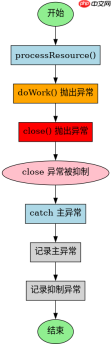
import java.io.*;
import java.util.logging.*;

public class SuppressedExample {
    private static final Logger logger = Logger.getLogger(SuppressedExample.class.getName());

    public static void main(String[] args) {
        try {
            processResource();
        } catch (Exception e) {
            // 记录主异常
            logger.log(Level.SEVERE, "Main exception occurred", e);

            // 记录被抑制的异常
            for (Throwable suppressed : e.getSuppressed()) {
                logger.log(Level.WARNING, "Suppressed exception during close", suppressed);
            }
        }
    }

    public static void processResource() throws Exception {
        Resource res = new Resource();
        try {
            res.doWork(); // 可能抛出 MainException
        } finally {
            // try-with-resources 会自动在这里调用 close()
            // 如果 close() 抛出 CloseException,它会被抑制
            res.close();
        }
    }

    static class Resource implements AutoCloseable {
        public void doWork() throws Exception {
            throw new Exception("Main Error");
        }

        @Override
        public void close() throws Exception {
            throw new Exception("Close Error");
        }
    }
}
手动管理 AutoCloseable 资源时如何记录抑制异常
如果不使用 try-with-resources 语法糖,而是手动调用 close(),则需要显式处理 close() 抛出的异常。若 try 块已抛出异常,应将 close() 的异常添加到主异常的 suppressed 列表中,以便后续统一记录。这确保了即使手动管理,也能保持与 try-with-resources 相同的异常传播语义。

使用Atmosphere构建通过WebSocket、SSE、gRPC、WebTransport、MCP、A2A和AG-UI流传输的JVM代理网关,并带有治理钩子。

import java.io.*;
import java.util.logging.*;

public class ManualSuppressedExample {
    private static final Logger logger = Logger.getLogger(ManualSuppressedExample.class.getName());

    public static void main(String[] args) {
        Resource res = null;
        try {
            res = new Resource();
            res.doWork();
        } catch (Exception e) {
            if (res != null) {
                try {
                    res.close();
                } catch (Exception closeEx) {
                    // 手动添加被抑制的异常
                    e.addSuppressed(closeEx);
                }
            }
            // 记录包含抑制异常的完整堆栈
            logger.log(Level.SEVERE, "Operation failed with suppressed errors", e);
        } finally {
            if (res != null) {
                try {
                    res.close();
                } catch (Exception e) {
                    logger.log(Level.WARNING, "Cleanup failed", e);
                }
            }
        }
    }

    static class Resource implements AutoCloseable {
        public void doWork() throws Exception {
            throw new Exception("Main Error");
        }

        @Override
        public void close() throws Exception {
            throw new Exception("Close Error");
        }
    }
}
基于 getSuppressed() 返回值的空值检查问题
在使用 getSuppressed() 时,必须检查其返回值是否为空数组。如果 try 块中没有抛出异常,或者 close() 成功执行,getSuppressed() 将返回一个长度为 0 的数组,而不是 null。因此,直接遍历该数组是安全的,无需进行 null 检查,但需确保循环体能正确处理空数组情况,避免不必要的逻辑开销。
Java免费学习笔记:立即使用
解锁 Java 大师之旅:从入门到精通的终极指南


