






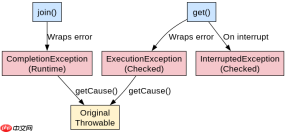
completablefuture.join() 抛出的是 completionexception。如果底层任务正常完成,该方法返回计算结果;如果任务因异常终止,它会将原始异常包装在 completionexception 中并抛出。调用者可以通过捕获该异常并使用 cause 获取原始错误信息。

join() 与 get() 的异常处理差异是什么
join() 和 get() 的核心区别在于对异常的处理方式。get() 声明抛出 InterruptedException 和 ExecutionException,属于受检异常(Checked Exception),强制调用者进行 try-catch 处理。而 join() 是非阻塞式的异步 API,它不抛出受检异常,而是将执行期间的异常统一包装为运行时异常 CompletionException。这种设计简化了代码结构,避免了大量的样板式异常处理代码。
import java.util.concurrent.CompletableFuture;
import java.util.concurrent.ExecutionException;

public class JoinVsGet {
    public static void main(String[] args) {
        CompletableFuture<string> future = CompletableFuture.supplyAsync(() -> {
            throw new RuntimeException("Task Failed");
        });

        // 使用 get() 需要处理 ExecutionException
        try {
            String result = future.get();
        } catch (ExecutionException e) {
            System.out.println("Caught ExecutionException: " + e.getCause().getMessage());
        } catch (InterruptedException e) {
            Thread.currentThread().interrupt();
        }

        // 使用 join() 直接抛出 CompletionException
        try {
            String result = future.join();
        } catch (CompletionException e) {
            System.out.println("Caught CompletionException: " + e.getCause().getMessage());
        }
    }
}</string>
运行上述代码,控制台将输出两次相同的错误信息:"Caught ExecutionException: Task Failed" 和 "Caught CompletionException: Task Failed"。这验证了两者都能正确捕获到底层抛出的 RuntimeException,只是包装的异常类型不同。

使用Atmosphere构建通过WebSocket、SSE、gRPC、WebTransport、MCP、A2A和AG-UI流传输的JVM代理网关,并带有治理钩子。
join() 抛出异常时如何获取原始异常类型
当 join() 抛出 CompletionException 时,原始异常被封装在其 cause 字段中。要获取具体的异常类型(如 NullPointerException 或自定义异常),必须调用 getCause() 方法。如果任务本身没有抛出异常,而是被取消或中断,getCause() 可能返回 CancellationException 或 InterruptedException。开发者应检查 cause 是否为空,并根据其具体类型进行分支处理。
import java.util.concurrent.CompletableFuture;

public class GetOriginalCause {
    public static void main(String[] args) {
        CompletableFuture<integer> future = CompletableFuture.supplyAsync(() -> {
            if (true) throw new IllegalArgumentException("Invalid Input");
            return 42;
        });

        try {
            future.join();
        } catch (CompletionException e) {
            Throwable cause = e.getCause();
            if (cause instanceof IllegalArgumentException) {
                System.out.println("Specific Error: " + cause.getMessage());
            } else {
                System.out.println("Other Error: " + cause.getClass().getName());
            }
        }
    }
}</integer>
该程序会输出 "Specific Error: Invalid Input"。通过 instanceof 判断,可以精确识别原始异常的类型,从而采取针对性的恢复或日志记录策略。若未发生异常,join() 不会进入 catch 块,直接返回结果。
Java免费学习笔记:立即使用
解锁 Java 大师之旅:从入门到精通的终极指南


