






Java CompletableFuture 中 怎么实现流水线处理
在 java 中,completablefuture 的流水线处理主要通过链式调用 thenapply()、thencompose() 和 thenaccept() 来实现。核心做法是将每个处理步骤封装为一个独立的异步任务,并通过前一个任务的完成来触发下一个任务,从而形成一条自动流转的处理链。这种方式避免了手动管理线程池和回调嵌套,使代码逻辑线性化且易于维护。

同步转换与异步组合的区别是什么
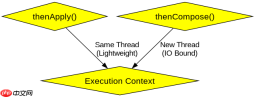
同步转换使用 thenApply(),它会在当前阶段完成后立即执行映射函数,适用于轻量级计算;异步组合使用 thenCompose(),它接收一个返回 CompletableFuture 的函数,用于串联多个异步操作,适用于 I/O 密集型任务或需要独立线程调度的场景。
import java.util.concurrent.CompletableFuture;
import java.util.concurrent.ExecutorService;
import java.util.concurrent.Executors;

public class PipelineDemo {
    public static void main(String[] args) {
        ExecutorService executor = Executors.newFixedThreadPool(4);

        // 模拟原始数据输入
        String input = "Hello";

        // 构建流水线:输入 -> 处理1 -> 处理2 -> 输出
        CompletableFuture<string> result = CompletableFuture.supplyAsync(() -> {
            System.out.println("Step 0: Input received");
            return input;
        }, executor)
        .thenApply(s -> {
            System.out.println("Step 1: Transforming (Sync)");
            return s.toUpperCase();
        })
        .thenCompose(s -> {
            System.out.println("Step 2: Async Processing (IO Simulation)");
            return CompletableFuture.supplyAsync(() -> {
                try { Thread.sleep(100); } catch (InterruptedException e) {}
                return s + " World";
            }, executor);
        })
        .thenAccept(finalResult -> {
            System.out.println("Final Result: " + finalResult);
        });

        // 阻塞等待结果
        result.join();
        executor.shutdown();
    }
}</string>
运行上述代码,控制台将按顺序输出 Step 0、Step 1、Step 2 以及最终结果。这证明了 thenApply 是同步执行的(在当前线程或上一阶段线程),而 thenCompose 内部触发的异步任务会在新线程中执行。

如何处理流水线中的异常中断
当流水线中某个节点抛出异常时,后续的正常步骤会被跳过,但可以通过 exceptionally() 或 handle() 进行捕获和处理。推荐使用 exceptionally() 提供默认值或降级逻辑,确保流水线不会因单个错误而静默失败,同时保持主流程的简洁性。

import java.util.concurrent.CompletableFuture;
import java.util.concurrent.ExecutionException;

public class ErrorHandlingDemo {
    public static void main(String[] args) throws ExecutionException, InterruptedException {
        // 模拟一个会失败的步骤
        CompletableFuture<string> faultyStage = CompletableFuture.supplyAsync(() -> {
            throw new RuntimeException("Processing failed!");
        });

        // 添加异常处理分支
        CompletableFuture<string> safePipeline = faultyStage
            .thenApply(s -> s.toUpperCase()) // 如果上面失败,这里不会执行
            .exceptionally(ex -> {
                System.out.println("Caught exception: " + ex.getMessage());
                return "Default Value"; // 提供默认返回值,恢复流水线
            })
            .thenApply(s -> s +</string></string>
Java免费学习笔记:立即使用
解锁 Java 大师之旅:从入门到精通的终极指南


