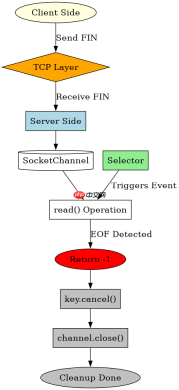
java nio 处理断开连接的核心机制是 selector 在轮询时返回 op_read 事件且读取字节数为 -1。当 socket 对端正常关闭连接(发送 fin 包)时,服务端调用 read() 方法会立即返回 -1,这标志着流结束。开发者需要在业务逻辑中捕获这一返回值,并主动调用 selectionkey.cancel() 取消该通道的注册,随后关闭通道资源,从而完成断开连接的清理工作。

Selector 轮询如何识别连接断开
在 NIO 模型中,判断连接是否断开依赖于 Selector.select() 返回的键集合以及随后的 read() 操作结果。如果网络异常导致连接中断(如 TCP RST),select() 可能会直接返回 OP_READ 或 OP_CONNECT 等事件,但具体的断开确认必须通过读取数据来验证。只有当 SocketChannel.read() 返回 -1 时,才能确定对端已优雅关闭连接。若抛出 IOException,则通常表示发生了非正常的网络错误,处理方式类似,需进行资源清理。
import java.io.IOException; import java.net.InetSocketAddress; import java.nio.ByteBuffer; import java.nio.channels.SelectionKey; import java.nio.channels.Selector; import java.nio.channels.ServerSocketChannel; import java.nio.channels.SocketChannel; import java.util.Iterator; import java.util.Set; public class NioDisconnectHandler { private Selector selector; public void start() throws IOException { selector = Selector.open(); ServerSocketChannel serverChannel = ServerSocketChannel.open(); serverChannel.configureBlocking(false); serverChannel.bind(new InetSocketAddress(8080)); serverChannel.register(selector, SelectionKey.OP_ACCEPT); while (true) { int readyChannels = selector.select(); if (readyChannels == 0) continue; Set<selectionkey> selectedKeys = selector.selectedKeys(); Iterator<selectionkey> keyIterator = selectedKeys.iterator(); while (keyIterator.hasNext()) { SelectionKey key = keyIterator.next(); keyIterator.remove(); try { if (key.isAcceptable()) { ServerSocketChannel ssc = (ServerSocketChannel) key.channel(); SocketChannel client = ssc.accept(); if (client != null) { client.configureBlocking(false); client.register(selector, SelectionKey.OP_READ); } } else if (key.isReadable()) { SocketChannel sc = (SocketChannel) key.channel(); ByteBuffer buffer = ByteBuffer.allocate(1024); int bytesRead = sc.read(buffer); if (bytesRead == -1) { // 检测到断开连接 closeConnection(key, sc); } else if (bytesRead > 0) { buffer.flip(); // 处理业务逻辑 byte[] data = new byte[buffer.remaining()]; buffer.get(data); System.out.println("Received: " + new String(data)); } } } catch (IOException e) { // 处理异常断开 closeConnection(key, key.channel()); } } } } private void closeConnection(SelectionKey key, Object channel) throws IOException { key.cancel(); if (channel instanceof SocketChannel) { ((SocketChannel) channel).close(); } } public static void main(String[] args) throws IOException { new NioDisconnectHandler().start(); } }</selectionkey></selectionkey>
取消注册与资源释放的具体步骤
一旦确认连接断开,必须执行严格的资源清理流程以防止内存泄漏和句柄耗尽。第一步是调用 SelectionKey.cancel(),这会从 Selector 中移除该通道的注册状态,确保下一次 select() 调用不再关注该通道。第二步是关闭底层的 SocketChannel 或 ServerSocketChannel 对象,释放操作系统级的文件描述符。如果在 read() 过程中发现 bytesRead 为 -1,说明对端已经发送了 FIN 包,此时不应再尝试写入数据,而应直接进入关闭流程。对于异常断开的情况,同样需要执行相同的取消和关闭操作,以保证系统状态的稳定性。


import java.io.IOException; import java.net.InetSocketAddress; import java.nio.ByteBuffer; import java.nio.channels.SelectionKey; import java.nio.channels.Selector; import java.nio.channels.ServerSocketChannel; import java.nio.channels.SocketChannel; import java.util.Iterator; import java.util.Set; public class NioResourceCleanup { private Selector selector; public void start() throws IOException { selector = Selector.open(); ServerSocketChannel serverChannel = ServerSocketChannel.open(); serverChannel.configureBlocking(false); serverChannel.bind(new InetSocketAddress(8081)); serverChannel.register(selector, SelectionKey.OP_ACCEPT); while (true) { int readyChannels = selector.select(); if (readyChannels == 0) continue; Set<selectionkey> selectedKeys = selector.selectedKeys(); Iterator<selectionkey> keyIterator = selectedKeys.iterator(); while (keyIterator.hasNext()) { SelectionKey key = keyIterator.next(); keyIterator.remove(); try { if (key.isAcceptable()) { ServerSocketChannel ssc = (ServerSocketChannel) key.channel(); SocketChannel client = ssc.accept(); if (client != null) { client.configureBlocking(false); client.register(selector, SelectionKey.OP_READ); } } else if (key.isReadable()) { SocketChannel sc = (SocketChannel) key.channel(); ByteBuffer buffer = ByteBuffer.allocate(1024); int bytesRead = sc.read(buffer); if (bytesRead == -1) { handleDisconnect(key, sc); } else if (bytesRead > 0) { buffer.flip(); System.out.println("Processing data..."); } } } catch (IOException e) { handleDisconnect(key, key.channel()); } } } } private void handleDisconnect(SelectionKey key, Object channel) throws IOException { // 1. 取消注册 key.cancel(); // 2. 关闭通道 if (channel instanceof SocketChannel) { ((SocketChannel) channel).close(); } } public static void main(String[] args) throws IOException { new NioResourceCleanup().start(); } }</selectionkey></selectionkey>
基于 read() 返回 -1 的具体行为分析
在程序中,SocketChannel.read() 返回 -1 是判断连接断开的唯一可靠依据。当对端调用 close() 时,TCP 协议栈会发送 FIN 报文。服务端收到 FIN 后,read() 会消耗掉缓冲区中剩余的数据,并在下一次读取时返回 -1。这意味着即使对端关闭了连接,服务端仍有机会读取到之前发送但未读完的数据。只有在所有数据都被读取完毕后,再次调用 read() 才会返回 -1。因此,在处理逻辑中,必须先处理完所有可用数据,再根据返回值决定是否需要关闭连接。如果 read() 返回 0,通常表示对端没有发送数据但连接仍然保持,这种情况在某些实现中可能不会发生,或者表示对端半关闭状态,具体行为取决于操作系统和网络栈的实现,但在标准 Java NIO 中,read() 返回 0 的情况较少见,通常直接处理非负返回值即可。
Java免费学习笔记:立即使用
解锁 Java 大师之旅:从入门到精通的终极指南