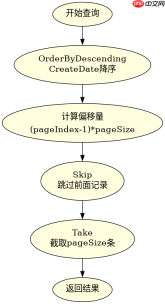
使用linq进行分页并按时间倒序返回数据,核心做法是先调用 orderbydescending 对时间字段排序,再使用 skip 和 take 实现分页。具体而言,假设实体类中有 datetime 类型的 createdate 属性,通过 .orderbydescending(x => x.createdate).skip((pageindex - 1) * pagesize).take(pagesize) 即可获取指定页的数据。这种写法确保了在内存或数据库层面先完成全局排序,再截取当前页所需片段,从而保证每页数据的顺序一致性。

LINQ分页中如何正确应用OrderByDescending与Skip、Take组合
在C# LINQ中,要实现按时间倒序的分页查询,必须严格遵循“先排序、后分页”的顺序。如果先使用 Skip 和 Take 再排序,会导致每一页内部有序,但页与页之间的数据顺序混乱,无法形成全局倒序视图。正确的做法是构建一个包含排序逻辑的查询表达式,将 OrderByDescending 置于链式调用的最前端,随后紧跟 Skip 计算偏移量,最后用 Take 限制返回数量。这样无论是执行 IQueryable 还是 IEnumerable,都能得到符合预期的结果。
using System;
using System.Collections.Generic;
using System.Linq;

public class Article
{
    public int Id { get; set; }
    public string Title { get; set; }
    public DateTime CreateDate { get; set; }
}

class Program
{
    static void Main()
    {
        var articles = new List<article>
        {
            new Article { Id = 1, Title = "A", CreateDate = new DateTime(2023, 1, 1) },
            new Article { Id = 2, Title = "B", CreateDate = new DateTime(2023, 5, 1) },
            new Article { Id = 3, Title = "C", CreateDate = new DateTime(2023, 3, 1) },
            new Article { Id = 4, Title = "D", CreateDate = new DateTime(2023, 7, 1) },
            new Article { Id = 5, Title = "E", CreateDate = new DateTime(2023, 2, 1) }
        };

        int pageIndex = 1;
        int pageSize = 2;

        var pagedData = articles
            .OrderByDescending(a => a.CreateDate)
            .Skip((pageIndex - 1) * pageSize)
            .Take(pageSize)
            .ToList();

        foreach (var item in pagedData)
        {
            Console.WriteLine($"ID: {item.Id}, Title: {item.Title}, Date: {item.CreateDate:yyyy-MM-dd}");
        }
    }
}</article>
上述代码定义了五个不同时间的文章对象,模拟真实数据源。设置第一页(pageIndex=1),每页两条(pageSize=2)。程序运行后,首先将所有文章按 CreateDate 降序排列,顺序为 D(7月), B(5月), C(3月), E(2月), A(1月)。接着 Skip 跳过 0 条记录,Take 取前 2 条,最终输出 ID 为 4 和 2 的记录。若将 pageIndex 改为 2,则跳过 2 条,取出 ID 为 3 和 5 的记录,依然保持时间倒序。这验证了排序在前、分页在后的逻辑正确性。
当存在相同时间戳时,LINQ分页如何保证稳定性
在实际业务中,同一时刻可能产生多条数据,此时仅靠 OrderByDescending 可能导致排序不稳定,即相同时间戳的记录在不同查询或环境下的顺序可能不一致。为了解决这个问题,需要在排序时引入第二个排序条件,通常是主键 Id。通过在 OrderByDescending 之后追加 .ThenByDescending(x => x.Id),可以确保在时间相同的情况下,ID 较大的记录排在前面。这种二级排序策略保证了分页结果的确定性和可重复性,避免因底层实现差异导致的随机排序问题。


using System;
using System.Collections.Generic;
using System.Linq;

public class Article
{
    public int Id { get; set; }
    public string Title { get; set; }
    public DateTime CreateDate { get; set; }
}

class Program
{
    static void Main()
    {
        var articles = new List<article>
        {
            new Article { Id = 1, Title = "A", CreateDate = new DateTime(2023, 1, 1, 12, 0, 0) },
            new Article { Id = 2, Title = "B", CreateDate = new DateTime(2023, 1, 1, 12, 0, 0) },
            new Article { Id = 3, Title = "C", CreateDate = new DateTime(2023, 1, 1, 11, 0, 0) },
            new Article { Id = 4, Title = "D", CreateDate = new DateTime(2023, 1, 1, 12, 0, 0) }
        };

        int pageIndex = 1;
        int pageSize = 2;

        var pagedData = articles
            .OrderByDescending(a => a.CreateDate)
            .ThenByDescending(a => a.Id)
            .Skip((pageIndex - 1) * pageSize)
            .Take(pageSize)
            .ToList();

        foreach (var item in pagedData)
        {
            Console.WriteLine($"ID: {item.Id}, Title: {item.Title}, Date: {item.CreateDate:HH:mm:ss}");
        }
    }
}</article>
该示例中,ID 为 1、2、4 的文章具有完全相同的创建时间 2023-01-01 12:00:00,而 ID 为 3 的文章时间为 11:00:00。在未添加 ThenByDescending 的情况下,这三条相同时间的记录顺序可能不确定。加入 .ThenByDescending(a => a.Id) 后,系统会先按时间倒序,时间相同时再按 ID 倒序。因此,相同时间的记录中,ID 4 排在最前,其次是 ID 2,最后是 ID 1。整体排序结果为:ID 4, ID 2, ID 1, ID 3。第一页(pageSize=2)将返回 ID 4 和 ID 2 的记录。这种处理方式消除了不确定性,确保了分页接口返回数据的稳定。
基于程序中Skip参数为0时的具体行为分析
当程序中的 pageIndex 设置为 1 时,Skip 的计算公式 (pageIndex - 1) * pageSize 结果为 0。此时 Skip(0) 不会跳过任何元素,直接从排序后的集合开头取数。结合 Take(pageSize),程序实际上返回的是整个排序结果的前 pageSize 条记录。这一行为验证了分页算法在第一页时的正确性:它确实对应着时间倒序排列的最顶端数据。若 pageIndex 小于 1,例如设为 0,则 Skip 值为负数,LINQ 会将其视为 0,行为与第一页相同;若 pageIndex 过大导致偏移量超过总记录数,Skip 将跳过所有元素,Take 返回空集合,程序不会抛出异常,而是安全地返回空列表。