






在 javascript 中,回调函数里的 this 指向丢失是因为函数被调用时失去了原有的上下文。保持 this 指向最直接的方法是使用箭头函数,或者使用 bind() 方法显式绑定。对于类实例中的异步操作,推荐使用箭头函数定义回调,这样能自动捕获外层作用域的 this。

为什么普通函数回调会丢失 this 指向
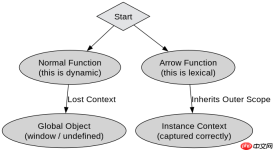
当把对象的方法作为回调传递给其他函数(如定时器或事件监听器)时,该方法会被当作独立函数调用,此时 this 默认指向全局对象(浏览器中为 window)或在严格模式下为 undefined。这是因为普通函数的 this 是在调用时动态确定的,而不是定义时。
class User {
  constructor(name) {
    this.name = name;
  }

  // 普通函数方式:this 指向丢失
  greet() {
    console.log('Hello, ' + this.name);
  }
}

const user = new User('Alice');
// 模拟回调场景
setTimeout(user.greet, 1000); // 输出: Hello, undefined (非严格模式) 或报错
上述代码中,user.greet 被提取出来传给 setTimeout,导致 this 不再指向 user 实例。这是最常见的 this 丢失场景。
如何使用 bind 和箭头函数修复 this 指向
修复 this 指向主要有两种方案:一是使用 Function.prototype.bind() 创建新函数并固定 this;二是使用箭头函数,它没有自己的 this,而是继承定义时所在作用域的 this。箭头函数在现代开发中更常用,因为语法更简洁且无需额外处理绑定逻辑。

你是 TypeScript 项目架构专家,专注于脚手架搭建生产就绪的 Node.js 和前端应用。生成包含现代工具链(pnpm、Vite、Next.js)、类型

class User {
  constructor(name) {
    this.name = name;
  }

  // 方案一:使用 bind
  greetBound() {
    return function() {
      console.log('Hello, ' + this.name);
    }.bind(this);
  }

  // 方案二:使用箭头函数(推荐)
  getGreetArrow() {
    return () => {
      console.log('Hello, ' + this.name);
    };
  }
}

const user = new User('Bob');
const callback1 = user.greetBound();
callback1(); // 输出: Hello, Bob

const callback2 = user.getGreetArrow();
callback2(); // 输出: Hello, Bob
在上面的示例中,greetBound 通过 bind(this) 确保了回调执行时 this 指向 user。而 getGreetArrow 利用箭头函数的词法作用域特性,直接捕获了 greetArrow 方法内的 this,从而正确指向 user 实例。这两种方式都能解决回调中 this 指向问题,但箭头函数写法更直观且不易出错。
在 Promise 链中如何保持 this 指向
在使用 Promise 进行异步操作时,如果回调方法需要访问实例属性,同样需要注意 this 的指向。在 .then() 或 .catch() 中传递方法引用时,如果不做处理,this 会丢失。最佳实践是在类中定义回调时使用箭头函数,或者在调用处使用 bind。
class DataFetcher {
  constructor(url) {
    this.url = url;
    this.data = null;
  }

  // 使用箭头函数确保 this 指向实例
  fetchData() {
    fetch(this.url)
      .then(response => response.json())
      .then(data => {
        // 这里的 this 指向 DataFetcher 实例
        this.data = data;
        console.log('Data loaded:', this.data);
      })
      .catch(error => {
        console.error('Error:', error);
      });
  }
}

const fetcher = new DataFetcher('https://api.example.com/data');
fetcher.fetchData();
在这个例子中,fetchData 方法内部的箭头函数回调自动继承了 DataFetcher 实例的 this。因此,在 .then() 中可以直接访问 this.data 和 this.url,无需担心 this 指向问题。这种方式比手动 bind 更简洁,且避免了因忘记绑定而导致的潜在 bug。
Java免费学习笔记:立即使用
解锁 Java 大师之旅:从入门到精通的终极指南





