






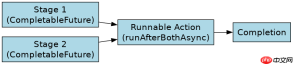
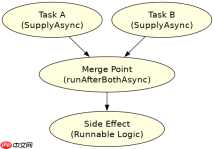
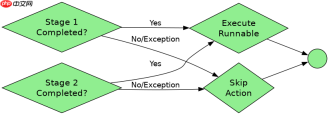
在 completionstage 的 runafterbothasync 方法中,直接传入一个函数式接口(如 runnable)即可触发异步执行。该方法要求两个阶段都完成,然后在新线程中运行提供的动作,不接收也不返回值。具体做法是调用 stage1.runafterbothasync(stage2, runnable),其中 runnable 通过 lambda 表达式实现,例如 (() -> system.out.println("done"))。如果两个前置阶段抛出异常,该动作不会执行;若需处理异常,应在动作内部捕获或提前使用 exceptionally。
如何传递带参数的业务逻辑
当需要执行带有特定参数或复杂逻辑的任务时,只需将具体的业务代码封装进 Runnable 的 Lambda 体中。由于 runAfterBothAsync 本身不支持传参给回调函数,所有需要的数据必须在创建 CompletableFuture 时通过闭包捕获,或者在动作内部从其他共享状态获取。这种方式适用于不需要返回结果、仅用于副作用操作(如日志记录、通知发送)的场景。
import java.util.concurrent.CompletableFuture;
import java.util.concurrent.ExecutionException;

public class RunAfterBothExample {
    public static void main(String[] args) throws ExecutionException, InterruptedException {
        CompletableFuture<string> stage1 = CompletableFuture.supplyAsync(() -> {
            try { Thread.sleep(100); } catch (InterruptedException e) {}
            return "Data from Stage 1";
        });

        CompletableFuture<string> stage2 = CompletableFuture.supplyAsync(() -> {
            try { Thread.sleep(200); } catch (InterruptedException e) {}
            return "Data from Stage 2";
        });

        // 定义要执行的 Runnable 逻辑
        Runnable action = () -> {
            System.out.println("Both stages completed. Executing side effect.");
            // 这里可以访问外部变量,因为它们是 effectively final
            String result1 = null;
            String result2 = null;
            // 注意:runAfterBothAsync 不直接提供结果,通常需要在外部存储或通过其他方式获取
            // 实际开发中,如果需要结果,建议使用 thenCombine
        };

        // 执行 runAfterBothAsync
        CompletableFuture> combined = stage1.runAfterBothAsync(stage2, action);

        // 等待主线程结束以观察输出
        combined.join();
        System.out.println("Main thread finished.");
    }
}</string></string>
上述代码展示了两个异步任务完成后,执行一个简单的打印动作。预期输出为:
Both stages completed. Executing side effect.
Main thread finished.

你是 TypeScript 项目架构专家,专注于脚手架搭建生产就绪的 Node.js 和前端应用。生成包含现代工具链(pnpm、Vite、Next.js)、类型
如何处理 runAfterBothAsync 中的异常
如果前置阶段之一失败,runAfterBothAsync 注册的 Runnable 将不会被执行。这是因为 runAfterBothAsync 依赖于两个阶段的正常完成(completion)。若要确保即使有异常也能执行清理工作,应结合 whenComplete 或在每个阶段单独注册异常处理器。此外,如果在 Runnable 内部发生未捕获异常,它将被传递给默认的 ForkJoinPool 异常处理器,可能导致线程终止而不影响其他并行任务。
import java.util.concurrent.CompletableFuture;
import java.util.concurrent.ExecutionException;

public class ExceptionHandlingExample {
    public static void main(String[] args) throws ExecutionException, InterruptedException {
        CompletableFuture<string> failingStage = CompletableFuture.supplyAsync(() -> {
            throw new RuntimeException("Simulated failure");
        });

        CompletableFuture<string> successStage = CompletableFuture.supplyAsync(() -> {
            return "Success";
        });

        // 由于 failingStage 失败,runAfterBothAsync 的动作不会执行
        failingStage.runAfterBothAsync(successStage, () -> {
            System.out.println("This will NOT be printed.");
        }).exceptionally(ex -> {
            System.out.println("Exception in the chain: " + ex.getMessage());
            return null;
        });

        // 为了看到结果,我们需要等待并处理可能的异常
        try {
            failingStage.join();
        } catch (Exception e) {
            System.out.println("Caught exception from failingStage: " + e.getMessage());
        }
    }
}</string></string>
运行此代码将输出:
Caught exception from failingStage: Simulated failure
The "This will NOT be printed." message will not appear because one of the stages failed.
Java免费学习笔记:立即使用
解锁 Java 大师之旅:从入门到精通的终极指南


